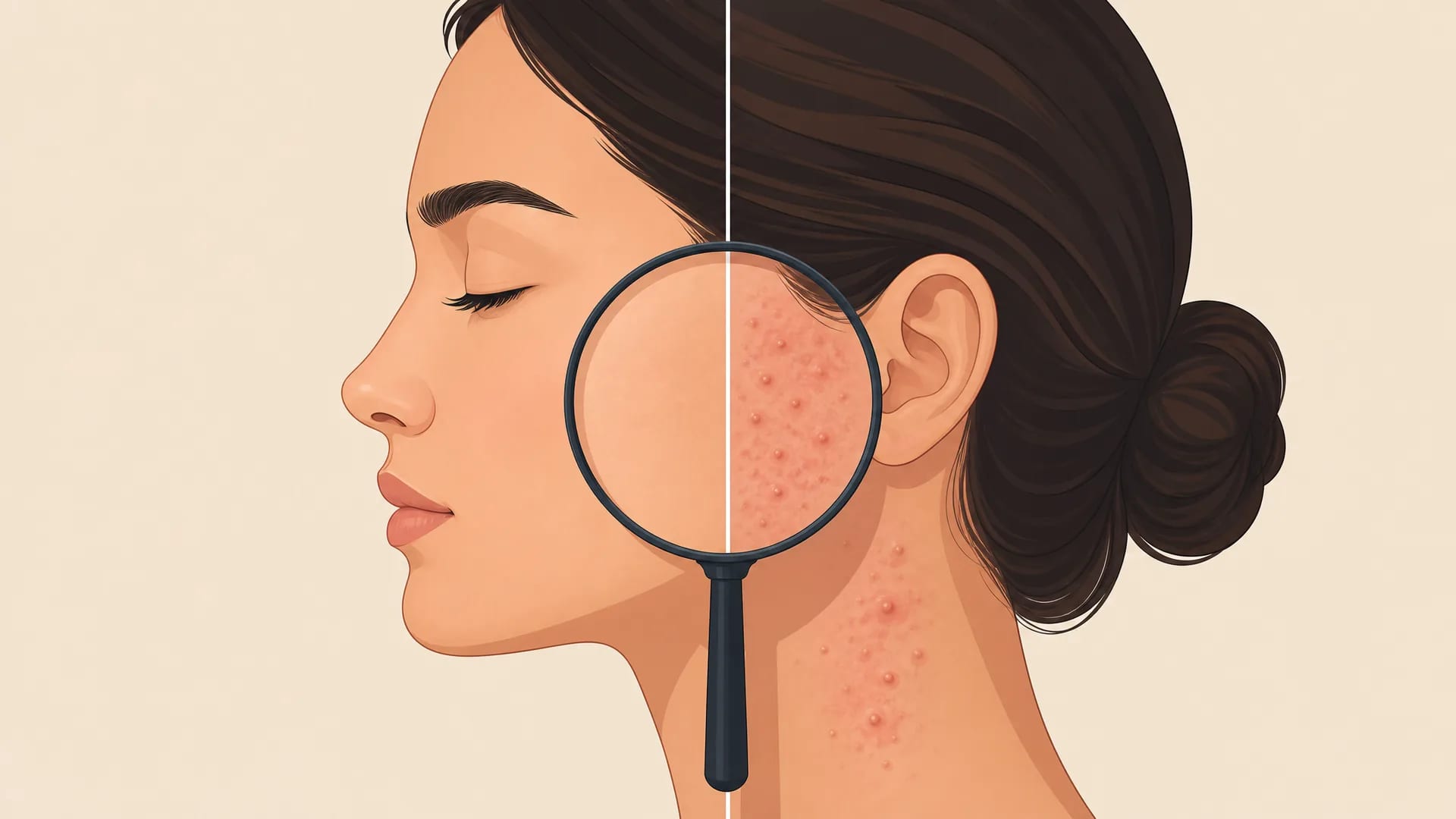
You book a facial hoping your skin will look calmer the next morning. Instead, you wake up with more bumps than you started with. So the question is fair: can facials worsen active breakouts? Sometimes, yes. But not always for the reason you'd think.
The honest answer depends on what happened during the session, and what your skin was doing before you walked in. Some flare-ups after a facial are temporary and expected. Others are a sign the treatment was wrong for your skin that day. Knowing the difference matters, especially for teens whose skin is still figuring itself out.
Active breakouts are already inflamed. Add too much pressure, heat, friction, strong exfoliation, or heavy products, and skin can react. The goal is not to fear facials. It is to stop guessing what your skin needs and choose care that respects its current condition.
Why Breakouts Sometimes Look Worse After a Facial
A facial that pushes new stuff to the surface, whether that's dead skin cells, deep exfoliants, or active ingredients, can trigger a short wave of breakouts before things improve. That's normal in some cases. But a facial that damages the skin barrier or inflames existing acne is a different problem entirely. This is especially relevant when your skin is dealing with several things at once: oiliness in humid weather, congestion around the forehead and jaw, sensitivity from new products, or dryness from acne treatments. In places with tropical heat and humidity, sweat, sunscreen, makeup, and daily friction can also make skin feel congested before a facial even begins.
The trick is telling these two situations apart. The right response to each one is completely different.
Purging vs. an actual bad reaction
“Purging” is often used to explain any breakout after a new product or facial. That label can make people wait through weeks of irritation that should have been addressed sooner.
Purging happens when a product or treatment speeds up cell turnover. Skin that was going to break out eventually just breaks out sooner. It shows up as small, similar-looking bumps in areas you already tend to break out, and it clears faster than a normal breakout cycle.
Purging typically clears up within a few weeks as cell turnover speeds up. A true reaction to over-aggressive extraction or harsh acids tends to linger, spread, or worsen instead of settling down. That timeline is the clearest signal you have.
A bad reaction looks different. It shows up in new spots, not just your usual trouble zones. It often comes with redness, swelling, or a burning feeling that doesn't fade. And instead of getting better week by week, it gets worse or stays put.
Pay attention to the pattern. Did your skin feel uncomfortable immediately afterward? Did bumps appear in unfamiliar areas? Did the facial include extractions, scrubbing, steam, or several active products? A clear timeline gives you more useful information than a vague promise that your skin is “getting worse before it gets better.”
When extractions push things in the wrong direction
Extractions are meant to clear a clogged pore, not injure the skin around it. When an esthetician pushes too hard, or works on a pimple that isn't ready to be extracted, the pressure can rupture the follicle wall under the skin. That spreads bacteria and oil into surrounding tissue instead of removing it.
The result is often worse than what you came in with. A single closed comedone can turn into two or three inflamed bumps within a day or two, all because of pressure applied in the wrong place at the wrong time.
Facial Techniques That Can Aggravate Active Acne
Not every facial technique is risky for breakout-prone skin. But some are consistently harder on active acne than others. It's worth knowing which ones by name rather than avoiding "facials" as a whole category.
Aggressive extractions and manual pressure
Hard, repeated manual pressure on inflamed acne is one of the most common causes of post-facial flare-ups. Cystic or deeply inflamed spots aren't ready for extraction at all. Pressing on them mostly just spreads inflammation sideways under the skin.
Even on milder breakouts, extraction technique matters. A light touch on a pore that's already near the surface behaves very differently from forceful pressure on one that isn't.
Harsh scrubs, high-strength acids, heavy occlusive products and steam overuse
Physical scrubs with large, rough particles can tear at inflamed skin and open tiny wounds around active breakouts. High-strength chemical acids, used at a concentration or frequency the skin isn't ready for, can strip the barrier faster than it can repair itself. That leaves skin raw and reactive.
Steam has its place, but overuse on already-inflamed skin adds heat and moisture that can intensify redness and swelling rather than calm it. Combine scrub, strong acid, and extended steam in one session, and you often get the exact recipe that turns a mild breakout into an angry one.
Heavy occlusive products are another possible trigger, particularly if you are prone to congestion. Rich masks and massage creams are not automatically bad, but they should be chosen with your skin in mind. The same goes for long facial massage and facial oils. These can feel relaxing, yet they may not be the right choice when your face is hot, tender, or actively inflamed.
A more intensive facial is also harder to tolerate if you have recently started prescription acne treatment, retinoids, benzoyl peroxide, or exfoliating acids at home. Your skin may be more sensitive than it looks. Be open about everything you are using, including viral products you tried only once or twice. Good care starts with an honest skin history, not a perfect routine.
Signs a Facial Was Too Much for Your Skin
You don't need a dermatology degree to tell when a facial went wrong. A short checklist can help you assess your skin honestly the day after, and again a few days later:
- Redness that's spreading rather than fading
- New whiteheads or pustules appearing two or three days later, in fresh spots
- A burning or stinging feeling that lasts more than 24 hours
- Skin that feels raw, tight, or noticeably more sensitive than usual
- Breakouts that look worse at the one-week mark instead of better
If you're checking off two or more of these, it's more likely you had a genuine reaction than a normal purge.
What a breakout-aware facial should look like
A helpful facial for acne-prone skin should feel considered, not dramatic. You do not need to leave looking intensely red for a session to count as effective. In fact, when skin is actively breaking out, restraint is often the smarter choice.
The provider should assess your current skin state before beginning. That means looking at where breakouts are appearing, whether they are inflamed or mostly congested, how reactive your skin feels, and what has changed since your last visit. A session should not run on autopilot just because you booked the same service before.
For some people, the best plan may involve gentle cleansing, hydration, calming steps, and limited treatment of only the clearest surface-level congestion. For others, it may mean skipping extraction entirely. That can feel disappointing if you expected a deep clean, but leaving inflamed areas alone is sometimes the most skin-respecting decision.
You should also be told what is being used and why. Vague claims and harsh promises are not a strategy. A good provider can explain the trade-off: treating congestion too aggressively may worsen irritation, while a gentler approach may require consistency and patience to show visible change.
Why gentler, trackable protocols matter for developing skin
Young skin is still adjusting. Hormones, oil production, and barrier strength are all in motion. A one-size-fits-all facial doesn't account for that. Skin conditioning built around scans and trend data does.
A teen who comes in with fresh, red pimples on the cheeks might get a calming, low-pressure session focused on hydration and oil balance that day. A stable breakout on the chin might tolerate light extraction. The scan decides, not a fixed menu. Saebit's protocols are adapted from Mikwang Academy in Seoul specifically for skin conditioning in Malaysia's heat and humidity, which is part of why sessions favor non-invasive, hydration-first steps over aggressive extraction when breakouts are active.
How to Get a Facial Safely When You Already Have Active Breakouts
Skipping facials completely isn't necessary just because your skin is breaking out right now. It just means the session needs to adjust to where your skin actually is.
Keep the days before your appointment simple. Do not try to “clear” your skin with extra scrubs, peel pads, new masks, or multiple spot treatments. Overcorrecting before a facial can leave your skin more reactive.
Share relevant details at the start of the session: recent breakouts, sensitivity, any stinging or peeling, medications, and products you use regularly. If you have a large, painful cyst, an open lesion, signs of infection, or acne that is causing scars, tell the provider. A facial is not a replacement for medical care, and a dermatologist is the right next step for persistent, severe, or painful acne.
Afterward, keep your routine calm for a day or two unless you have been given individualized professional instructions. Cleanse gently, use a basic moisturizer, wear sunscreen during the day, and avoid picking. Do not stack strong actives because you feel pressured to make the facial “work harder.” Your skin needs recovery time, not punishment.
What to tell your esthetician or coach beforehand
Say it plainly before the session starts: which areas are actively breaking out, how long they've been there, and whether any spots are painful to the touch. Ask directly what pressure level they plan to use on active spots, and whether they'll skip extraction on anything that looks inflamed or cystic.
You're allowed to ask them to hold off on a technique if it doesn't feel right for what's on your face that day.
Why a skin scan beats guessing
Telling someone "my skin is breaking out" is useful, but a scan tells a coach exactly how inflamed, dehydrated, or reactive your skin is at that moment, not just where the visible bumps are. That's the difference between a Personal Skin Profile and a verbal description.
A scan-based read removes the guessing game of whether your skin can handle conditioning today, or whether it needs a calmer, hydration-first approach first. That single decision is often what separates a facial that helps from one that backfires.
Instead of judging a facial by how much was extracted or how intense it felt, judge it by what happens next. Does your skin feel calmer? Is redness settling? Are you seeing less congestion over repeat visits? Or are you repeatedly leaving irritated and unsure what changed?
Skin progress is rarely one dramatic before-and-after moment. It is clearer when you have a baseline, a focused plan, and repeat comparisons instead of a new trend every week. If a facial consistently worsens your active breakouts, pause the aggressive steps and ask for a gentler, more transparent approach. Your skin does not need to be pushed to prove that care is working.
When to Pause Facials and See a Dermatologist Instead
Facials, even gentle ones, aren't the right tool for every kind of breakout. Some signs mean it's time to pause conditioning altogether and get medical care instead.
Watch for cystic acne: large, painful, deep bumps that don't come to a head. Watch for signs of infection: spreading warmth, pus, or fever. And watch for breakouts that show no improvement after several weeks of consistent, gentle care.
Any of those point to something a skin coach or esthetician isn't equipped to treat. A dermatologist can prescribe medication that addresses the underlying cause. No amount of facial technique can substitute for that.
For everything short of that, the safer starting point is knowing what your skin can handle before a coach ever touches it. A free 90-second Skin Assessment gives you that answer before you book anything, so you and your coach decide together whether today calls for calming care or real conditioning, instead of finding out the hard way.