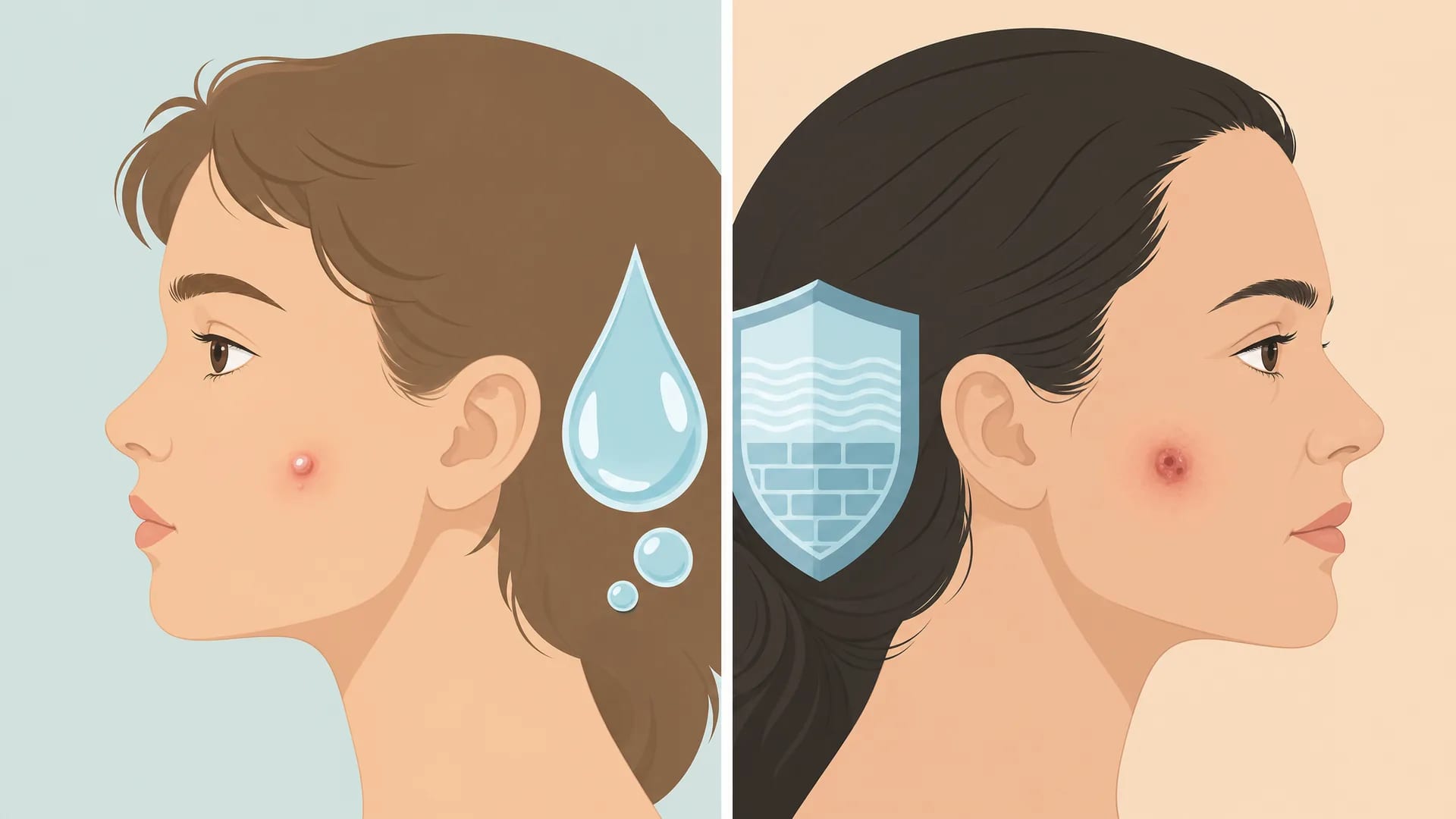
Acne is acne, right? A pimple is a pimple whether you're 15 or 35. That assumption is exactly why so much skincare advice fails teens. Most content treats acne as one condition with one fix, when teenage acne vs adult acne differences run deep, different causes, different skin barriers, different climate pressures. If you're a teen dealing with breakouts in Malaysia, or a parent trying to help, understanding those differences matters more than finding another "miracle" product.
Teenage Acne vs Adult Acne: Same Word, Different Skin Story
Type "acne treatment" into any search bar and you'll get advice built for one generic face. It rarely says which age, which skin history, or which climate it's talking about. That's the problem.
A breakout on a 15-year-old and a breakout on a 35-year-old can look identical on the surface. What's happening underneath is not the same at all. Oil production, barrier strength, even the speed at which skin recovers, all differ by life stage. Treat them the same and you end up over-treating one and under-treating the other.
Why Teen Acne Is Different From What Most Advice Assumes
Most acne advice online is written by and for adults dealing with adult skin concerns: stress breakouts, hormonal cycles, years of sun damage or product buildup. Teen skin hasn't lived through any of that yet. It's still forming its barrier, still adjusting to a completely new hormonal environment. When a teen follows an adult acne routine, they're often applying a fix designed for a different problem.
Root Causes Differ by Age
The word "acne" describes a symptom, not a cause. The causes genuinely diverge once you separate teen skin from adult skin.
Hormonal Acne in Teens: Puberty and Oil Overdrive
Hormonal acne in teens is driven mainly by puberty. As androgen hormones rise during the teenage years, oil glands go into overdrive. Skin that was calm at 11 can be producing far more sebum by 14 or 15. That extra oil mixes with dead skin cells and clogs pores, which is what triggers most teenage breakouts.
Dermatologists generally describe teen acne as driven primarily by puberty-related androgen surges that increase oil production, while adult acne is more often tied to hormonal fluctuations, stress, and cumulative barrier damage. That's not a small distinction. It means the treatment priority for teens should start with managing oil and supporting the barrier, not aggressively stripping the skin.
Adult Acne: Stress, Fluctuation, and Barrier Fatigue
Adult acne tends to have a different engine. It's often linked to stress hormones, monthly hormonal cycling, or a barrier worn down over years of sun exposure, harsh actives, or inconsistent routines. Adult skin has usually built up some resilience, but it's also carrying more damage. That's why adult acne routines often lean on stronger actives: the skin can generally tolerate more, and it needs more to undo years of wear.
Put a 15-year-old's hormonal breakout next to a 22-year-old's stress-linked adult acne, and they can look nearly identical from the outside. The barrier readings underneath tell a very different story. One skin is still developing. The other is already established and simply fatigued.
Why Adult Acne Products Fail on Teen Skin
This is where most teens get stuck. They see a product working for an older sibling, a parent, or an influencer with adult acne, and assume it will work the same way for them. Often it doesn't. Sometimes it makes things worse.
Over-Treating a Still-Developing Barrier
Products formulated for adult acne are often built for skin that can handle intensity: high-strength acids, strong retinoids, aggressive drying agents. That's appropriate for a mature barrier that's had years to build tolerance.
A teen's barrier hasn't had that time. It's still developing, still thinner in places, still learning to regulate oil and moisture on its own. Apply an adult-strength product to that barrier and you don't get faster clearing. You get stripping, redness, and often a rebound in oil production as skin tries to compensate for what was stripped away.
In Malaysia's heat and humidity, that damage compounds faster. A stripped barrier in a hot, humid environment struggles to hold onto hydration, which leaves teen skin more reactive and more prone to further breakouts. This is why acne skin conditioning, a gradual, supportive approach rather than an aggressive one, tends to work better for developing skin than a straight oil-stripping routine.
Teen Skin Barrier Health at the Centre of the Fix
If there's one idea worth taking from all of this, it's that the teen skin barrier deserves more attention than it usually gets. Most teen-facing acne advice focuses entirely on oil control. Barrier health barely gets a mention.
What a Healthy Barrier Looks Like During Puberty
A healthy barrier during puberty isn't oil-free. That's not realistic when androgen levels are pushing sebum production up. A healthy teen barrier can regulate that oil without becoming inflamed, dehydrated, or overly reactive to everyday products.
When the barrier is doing its job, breakouts still happen, because puberty is still puberty. But they resolve faster, don't scar as easily, and don't spread into wider irritation. When the barrier is compromised, even mild products can trigger flare-ups, because the skin has lost its ability to buffer everyday exposure.
Acne During Puberty in Malaysia's Climate
Acne during puberty in Malaysia doesn't behave exactly like acne during puberty in a cooler, drier country. Most acne advice online is written with temperate climates in mind: routines built around heavier moisturizers, less sweat, less constant humidity.
Tropical humidity and heat speed up oil turnover and sweat-related congestion, which is part of why Malaysian teens often see faster breakout cycles than guidance written for temperate climates accounts for. Sweat mixes with oil more often throughout the day, pores clog faster, and heavy Western-style routines can feel suffocating rather than helpful in local conditions.
This is one of the clearest examples of why teen acne is different depending on where you live, not just how old you are. A routine copied from a foreign skincare video may simply not suit Malaysian heat, no matter how well it worked for the person who posted it.
When to Get a Professional Skin Read Instead of Guessing
At some point, trial and error stops being useful. If a teen has tried several products over several months with no real improvement, that's usually a sign the actual problem hasn't been correctly identified, not that they haven't tried hard enough.
Signs Home Remedies and Random Products Aren't Enough
A few signs it's time to stop guessing:
- Breakouts keep returning in the same areas despite consistent product use
- Skin feels irritated, tight, or reactive after "gentle" products
- Redness or sensitivity has increased over the past few months
- Nobody can say whether the issue is oil, barrier damage, or both
Guessing from a mirror only goes so far, because oil balance and barrier health aren't things you can reliably judge by eye. Saebit's JANUS Pro scanning builds a Personal Skin Profile that tracks barrier health and oil balance over time, rather than guessing from a single visual check. A teen's actual skin stage, not their age, not a generic quiz result, decides what the routine should be.
The starting point is a free 90-second Skin Assessment, which gives a first read on where skin stands before committing to any product. From there, a JANUS Pro scan builds out the full Personal Skin Profile, and Skin Training Sessions adapt Korean skin-conditioning protocols from Mikwang Academy in Seoul specifically for skin still developing in Malaysia's heat and humidity. That combination of assessment, scan, and guided training replaces trial-and-error with an actual plan.
If you've been cycling through products without a clear reason why any of them worked or didn't, it's worth getting a proper skin assessment instead of another quiz. Understanding your skin's actual stage is the difference between guessing and training it properly.