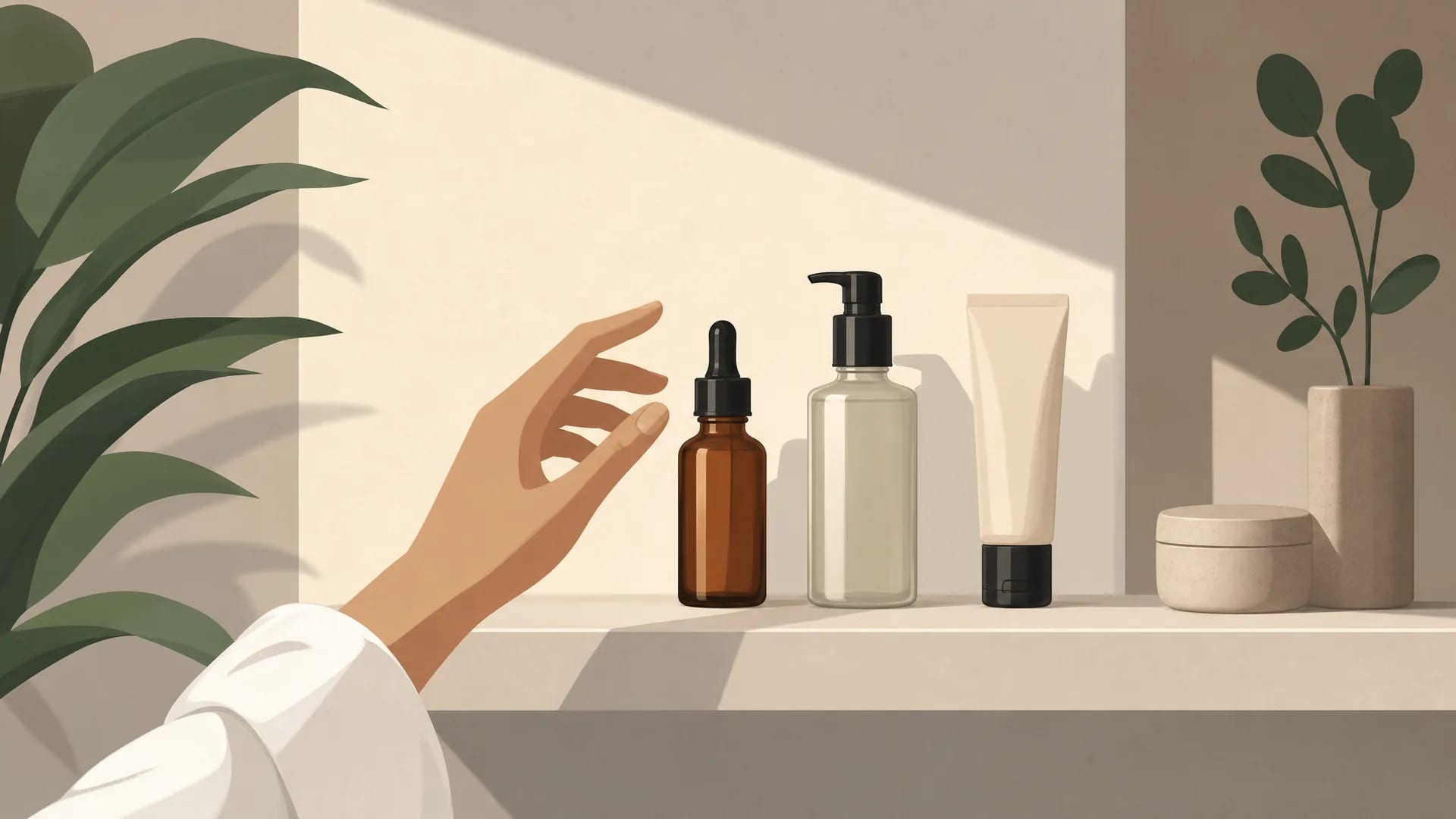
Browse through social media these days and you'll see many affliate links selling Rejuran serums or many testimonies of a viral moisturiser, and a caption that says "you need this." It's a lot. If you've ever stood in a shop holding three products, feeling more confused than when you walked in, you're not alone. Most teens and young adults don't know what products they need.
They just need the right few, matched to what their skin is actually doing right now. Skin does not need a new experiment every week. It needs a clear read, a realistic priority, and enough consistency to tell whether something is actually helping.
If your routine currently changes with every new video you see, pause before your next purchase. This guide breaks that down plainly: what you actually need, why Malaysia's climate changes the answer, and how to stop guessing.
Why More Skincare Products Isn't Always Better
A new breakout before a class, makeup that suddenly pills, a forehead that looks shiny by lunch but feels tight after cleansing - skin can feel like a constant set of contradictions. Social media shows outcomes with before and after pictures. But often that is lack of transparency and legitimacy if the products promoted actually contributed to the outcome. The usual response is to buy another trending serum, switch cleansers, or copy someone else’s routine. It is also how many people end up with more products, less clarity, and skin that feels increasingly unpredictable. But skin doesn't respond to number of products. It responds to the right actives at the right dose, applied consistently.
The 'more steps = better skin' myth
Teen and young adult skin is changing. Hormones can increase oil production, pores can congest more easily, and breakouts may appear in places that were previously clear. At the same time, skin can become reactive from over-cleansing, harsh spot treatments, frequent exfoliation, or trying multiple active ingredients at once.
Piling on products often backfires. Every extra step is another chance to irritate your barrier, clog a pore, or cancel out something else in your routine. A basic routine of three to four products, chosen well, will outperform a ten-product stack picked because it was trending and worked for someone else.
Signs your routine has too many actives
Watch for these signs. Your skin feels tight or stings after applying products. You're breaking out in new spots you didn't have before. Your skin looks red and irritated for no clear reason. These usually mean you're layering too many actives at once, not that you're missing a product. A student who cleanses twice daily but keeps breaking out is often using the wrong combination of actives, not too few products. The fix is usually subtraction, not addition.
The Core Categories of Skincare Products Everyone Needs
Strip away the trends and every effective routine comes down to four categories: cleanser, moisturizer, sunscreen, and one targeted treatment. That's it.
Cleansers and why gentle beats 'deep clean'
"Deep clean" sounds appealing when your skin feels oily. But a cleanser that strips too hard just makes your skin produce more oil to compensate. Look for a gentle, low-pH formula that removes dirt and sunscreen without leaving skin feeling tight. Tight after cleansing usually means over-cleansed, not clean.
Moisturizers, hydration, and oil balance
Oily skin still needs moisturizer. Skipping it because you're afraid of shine usually makes oil production worse, not better. The goal is hydration and oil balance together: a lightweight formula that hydrates without adding heaviness. Sunscreen and a targeted treatment, whether that's an active for breakouts or one for texture, round out the four essentials. Nothing else is required to start.
Choosing Skincare Products for Malaysian Heat and Humidity
A routine copied from a skincare guide written for a cold, dry climate won't behave the same way on your skin in Bandar Sunway or Petaling Jaya. Climate changes how products perform, not just how they feel.
Why tropical climate changes product needs
Humidity and heat in Malaysia change how quickly actives like salicylic acid and niacinamide absorb, and how oily skin reacts through the day, compared to temperate climates. A moisturizer that feels perfect in an air-conditioned lecture hall in Petaling Jaya can feel heavy by the time you're walking home in Subang Jaya's afternoon heat. Understanding how Malaysia's humidity affects your skin barrier is the starting point for picking formulas that actually hold up outdoors, not just indoors.
Texture and formulation notes for humid weather
In this climate, lightweight, non-comedogenic textures matter more than they would in a cooler country. Gel and gel-cream moisturizers usually outperform thick creams for daily wear in Shah Alam or Cyberjaya heat. Heavier creams still have a place, but usually only at night or during air-conditioned stretches, not as your all-day default.
Ingredient-First Picks for Teen and Young Adult Skin
Product names change every season. Ingredients don't. Learning what an ingredient actually does, rather than chasing whatever's trending, is the fastest way to stop wasting money on the wrong skincare products.
Salicylic acid vs niacinamide for oil and breakouts
These two get confused constantly, but they solve different problems. Salicylic acid works inside the pore, clearing out oil and debris that lead to breakouts. Niacinamide works on the surface. It calms redness and helps regulate oil production over time. A closer look at salicylic acid vs niacinamide for teen skin can help you decide which one matches your specific concern before you buy either. If oil control alone is your main issue, a dedicated look at niacinamide for oily teen skin is worth reading before you commit to a product.
When to introduce exfoliating or resurfacing actives
Not every shine is a problem or every bump needs aggressive treatment. Context matters. Oiliness can coexist with dehydration. Congestion can look similar to irritation. A product that gives an immediate smooth feeling may not be improving the concern you actually want to address.
The goal is not perfect skin. The goal is to understand your own skin well enough to make calmer decisions.
One priority at a time. That's the whole rule. Korean skin-conditioning routines favor enzyme resurfacing and barrier support before strong actives get introduced, and that order matters more than product count. Get your cleanser, moisturizer, and sunscreen consistent first. Then introduce one active, at a low frequency, and give it several weeks before you judge it or add another. Trying to fix oiliness, acne, dark marks, texture, pores, redness, and dryness at once usually creates an overloaded routine. It may also make it impossible to know what is causing irritation or improvement.
This does not mean ignoring everything else forever. It means creating enough focus for your routine and conditioning plan to be readable. When you change fewer variables, you can see more clearly what your skin tolerates.
There are trade-offs. A strong active product may be appropriate for some skin concerns, but more strength is not automatically more effective. If it causes persistent peeling, burning, or redness, it can leave skin looking worse and make you abandon the routine altogether. A simpler approach may feel less exciting, but consistency usually gives better information than intensity.
How to Know Which Skincare Products Are Right for Your Skin
Trial and error is expensive and slow. It usually means weeks with the wrong product before you notice it's not working. There's a more direct way to answer the question of which skincare products your skin actually needs.
Reading your skin type accurately
Skin type isn't fixed the way most teens think. It shifts with humidity, stress, and sun exposure through the week. What looks like "combination skin" in the morning at your desk in Cyberjaya might read as fully oily by afternoon in Bangsar's outdoor heat. Guides on reading your skin type accurately in humid climates explain why a single glance in the mirror often gets this wrong.
Where a skin scan removes the guesswork
This is exactly why guessing isn't the most reliable approach. Saebit's Personal Skin Passport matches ingredient recommendations to your JANUS Pro scan data instead of guesswork or trending TikTok products. Instead of buying a product because an influencer used it, you get a recommendation matched to your skin's actual oil levels, hydration, and barrier condition. That's the difference between hoping a product works and knowing why it should.
Build the routine around daily conditions
For most teens and young adults, a routine does not need to be complicated. It needs to be repeatable on busy school mornings, after workouts, and on tired nights when you want to go straight to bed.
During the day, sunscreen matters in Malaysia’s strong sun, especially if you are dealing with marks after breakouts or using ingredients that can make skin more sensitive.
The exact products and steps depend on your skin, your budget, and your level of sensitivity. Someone who wears makeup daily may need a different cleansing approach than someone who does not. Someone who plays sports outdoors may need to be more deliberate about reapplying sun protection. The common rule is simpler: do not add new things at the same time.
Give a change time to show itself. Unless you experience irritation, introduce one product or one adjustment, keep the rest stable, and observe. Your skin is not a group project for every product in your bathroom cabinet.
Building and Tracking Your Skincare Product Routine Over Time
Once you've got the right four categories and one well-chosen active, the job shifts from choosing products to staying consistent with them. Consistency is what actually changes skin, not the number of bottles on your shelf. Progress in skincare is usually slow and gradual, so building a consistent skincare routine matters more long-term than chasing the next trending product.
The other half of consistency is tracking. If you can't tell whether a product is working after a few weeks, you can't decide whether to keep it, adjust it, or drop it. Learning about tracking your skincare progress the right way turns your routine into something measurable instead of a guessing game repeated every month.
If you're still not sure which ingredients or products your skin actually needs, start with the free Skin Assessment for Malaysian teens. It takes 90 seconds, and it's a faster way to find your starting point than another week of trial and error. From there, a JANUS Pro scan and a Skin Training Session can turn that first read into an actual plan, one built for skin living through heat and humidity, whether you're in Damansara, Puchong, or anywhere in between. And if oil has always felt like your biggest daily battle, it's worth understanding why your skin gets so oily in Malaysia before you decide what to buy next.