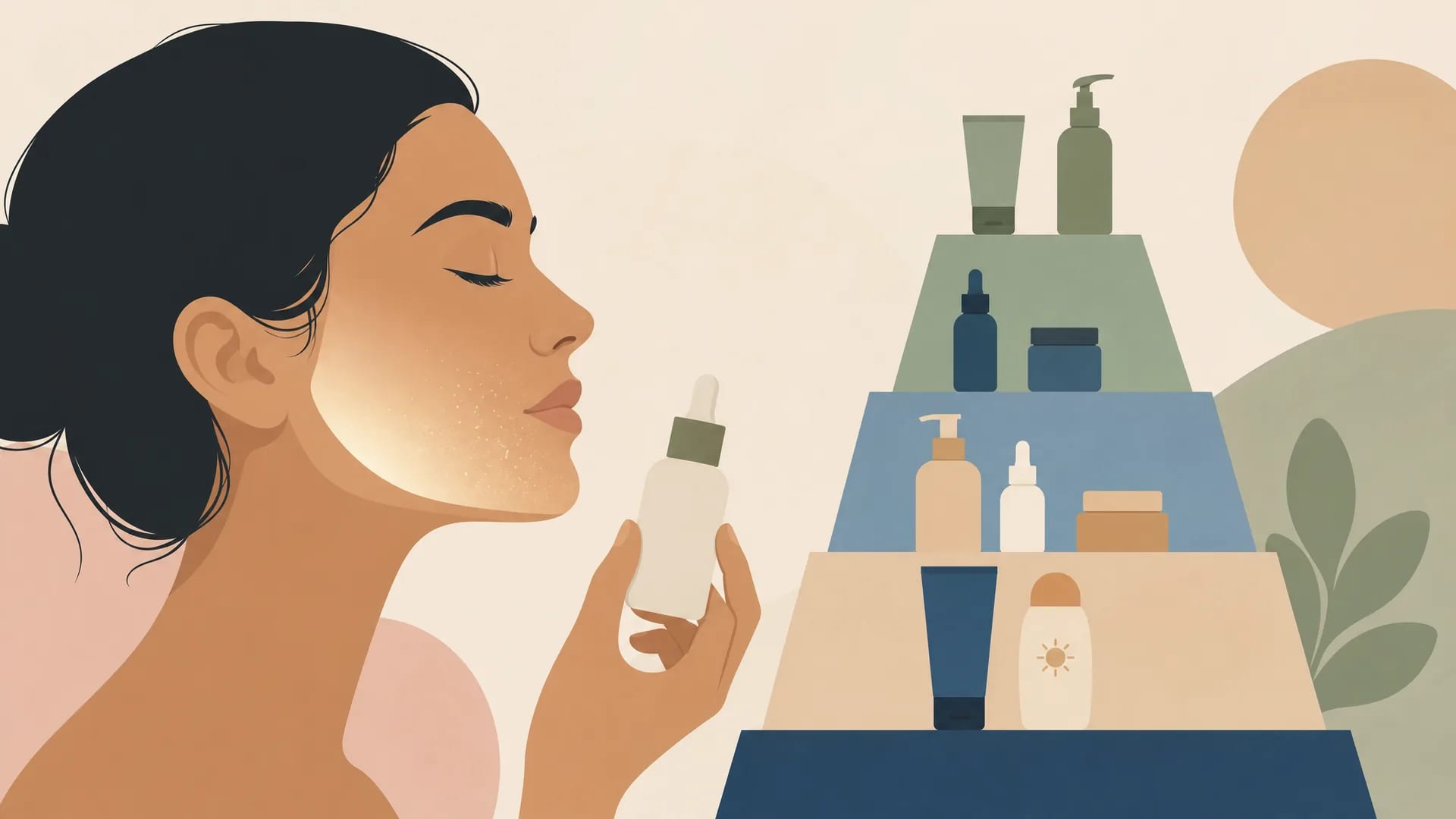
You book a facial. Your skin looks brighter for two weeks. Then it quietly slides back to where it started, and you're left wondering if you imagined the improvement in the first place.
This is one of the most common patterns in teen skincare. Almost nobody explains why it happens.
The One-Facial Fix Is a Myth
A facial, a microneedling session, or a blue light treatment all do real things to your skin. They clear congestion. They stimulate collagen. They calm inflammation. The results are genuine. They're just temporary if nothing else changes.
Treatment is one input. It's not the whole equation.
Why results from a single treatment plateau or reverse
Your skin resets itself daily. Oil production, hydration, cell turnover, none of that pauses because you had a good facial last Tuesday.
Take a student who gets microneedling for post-acne marks but keeps using harsh drugstore cleansers and skips sunscreen. The marks often resurface within weeks. The treatment worked. The system around it didn't.
Without daily support, skin drifts back to its old habits. This is also why a facial alone can sometimes backfire. A single aggressive session with no aftercare plan can irritate skin that wasn't ready for it.
Treatment Alone Is Not Enough, You Need a System, and That Includes Skincare
Here's the reframe: treatment alone doesn't cut it. You need a system, and that includes skincare done daily, not just in a treatment room.
A system isn't a fancier word for "routine." It's three things working together.
What "the system" actually means: routine, tracking, coaching
First, a daily routine matched to your actual skin condition, not a generic list of steps copied from social media.
Second, tracking. Regular scans that show whether your skin is actually improving, holding steady, or slipping.
Third, coaching. Someone reads those results and adjusts your plan before small issues turn into bigger ones.
Remove any one of these and the other two lose most of their value. A routine without tracking is guesswork. Tracking without coaching is data nobody acts on. A treatment without either is a one-time event with no memory.
Why Facials Don't Work Long Term Without Daily Habits
Malaysia's climate makes this problem worse, not better. Heat and humidity push oil glands into overdrive. They also pull moisture out of the skin barrier faster than in cooler, drier countries.
That means the effects of a single facial fade sooner here than they might elsewhere. Your skin barrier takes a daily beating from the same heat and sweat that make Bandar Sunway, Puchong, Shah Alam, and Petaling Jaya feel the way they do most of the year.
Korean skin conditioning for tropical climates
Korean skin-conditioning protocols are built for consistency over intensity. Each session is one checkpoint in an ongoing plan, not a stand-alone fix.
Saebit adapts this thinking from Mikwang Academy in Seoul and applies it to skin that deals with far more heat and humidity than Korean skin typically faces. That's part of what Korean skin conditioning built for tropical climates actually looks like in practice: sessions paired with daily maintenance designed for this weather, not borrowed unchanged from a cooler climate.
Consistent skincare habits for teens
Teenage skin is also mid-change. Hormones shift oil production week to week, so a routine that worked in June might need adjusting by August.
Consistent skincare habits for teens matter more than intense but occasional intervention. Small daily actions, a proper cleanse, the right moisturizer weight, actual sunscreen, do more compound work than any single session can on its own.
How Tracking Turns a Treatment Into a System
This is where most "skincare advice" stops short. It tells you to be consistent but gives you no way to check whether consistency is actually working.
Tracking closes that gap. It's the difference between hoping your skin is improving and knowing it.
What your skin scan results mean
At Saebit, JANUS Pro scanning measures hydration, oil balance, and texture at every visit. That gives you a real, numbers-based picture of your skin, not a guess based on how it looks under bathroom lighting.
Compare two scans a month apart and you can see whether a treatment's effect actually held, or whether it faded once you walked out the door. That's the whole point of what your skin scan results actually mean: turning a vague sense of "my skin feels okay" into something you can act on.
Skin Passport and personal skin profile
Every scan, session, and product change gets logged into a Skin Passport. Your progress gets tracked over months, not guessed at after one facial.
Your personal skin profile becomes the reference point for every decision after that: whether to adjust your routine, add a treatment, or hold steady because things are working. This is also where the benefits of tracking your skin's progress become obvious. You stop reacting to how your skin looks on a given day and start responding to actual trend data.
This is the identify-scan-understand-train journey in practice. You identify the issue, scan to get real numbers, understand what those numbers mean for your specific skin, then train daily habits around that understanding.
Building a Skin Routine That Lasts Beyond the Studio
None of this works if the days between sessions are unstructured. The routine is where the system either holds or falls apart.
Ingredient-first choices for oily, acne-prone teen skin
Think in ingredients, not products. For oily, acne-prone teen skin, a few things matter more than the rest.
A gentle cleanser that removes oil without stripping the barrier. Stripping triggers more oil production, not less.
Niacinamide helps regulate oil and calm redness. It's one of the more forgiving actives for teen skin.
A lightweight, non-comedogenic moisturizer. Oily skin still needs hydration. Skipping moisturizer often makes oil production worse.
Daily SPF, non-negotiable in Malaysia's sun. This also protects any post-treatment results from reversing through pigmentation.
That's the baseline. From there, adjustments depend on what your scans show, not on what looks trendy. For a fuller walkthrough of how to build a consistent skincare routine, the sequence matters as much as the ingredients.
Starting Your Own System Instead of Chasing the Next Treatment
Once a routine and tracking are in place, treatments stop being emergency fixes. They become planned check-ins. How often you need one depends on what your scans show, not a fixed calendar. How often teens should actually get facials really comes down to what your skin data says between visits.
The shift that matters most is mental. Stop asking "what treatment do I book next." Start asking "what does my system look like this month."
That shift is easier with support behind it. To see what that support looks like on day one, what happens at your first Skin Training Session walks through the actual first steps.
If you're in Bangsar, Taman Tun Dr Ismail, Cyberjaya, Damansara, or Subang Jaya and tired of results that don't stick, this is also part of a measured, science-backed approach to skin optimization, one that treats your skin as a long-term project, not a single appointment.
Book a free 90-second Skin Assessment and JANUS Pro scan. Start a tracked skin conditioning system, not another one-off treatment that fades in a few weeks.