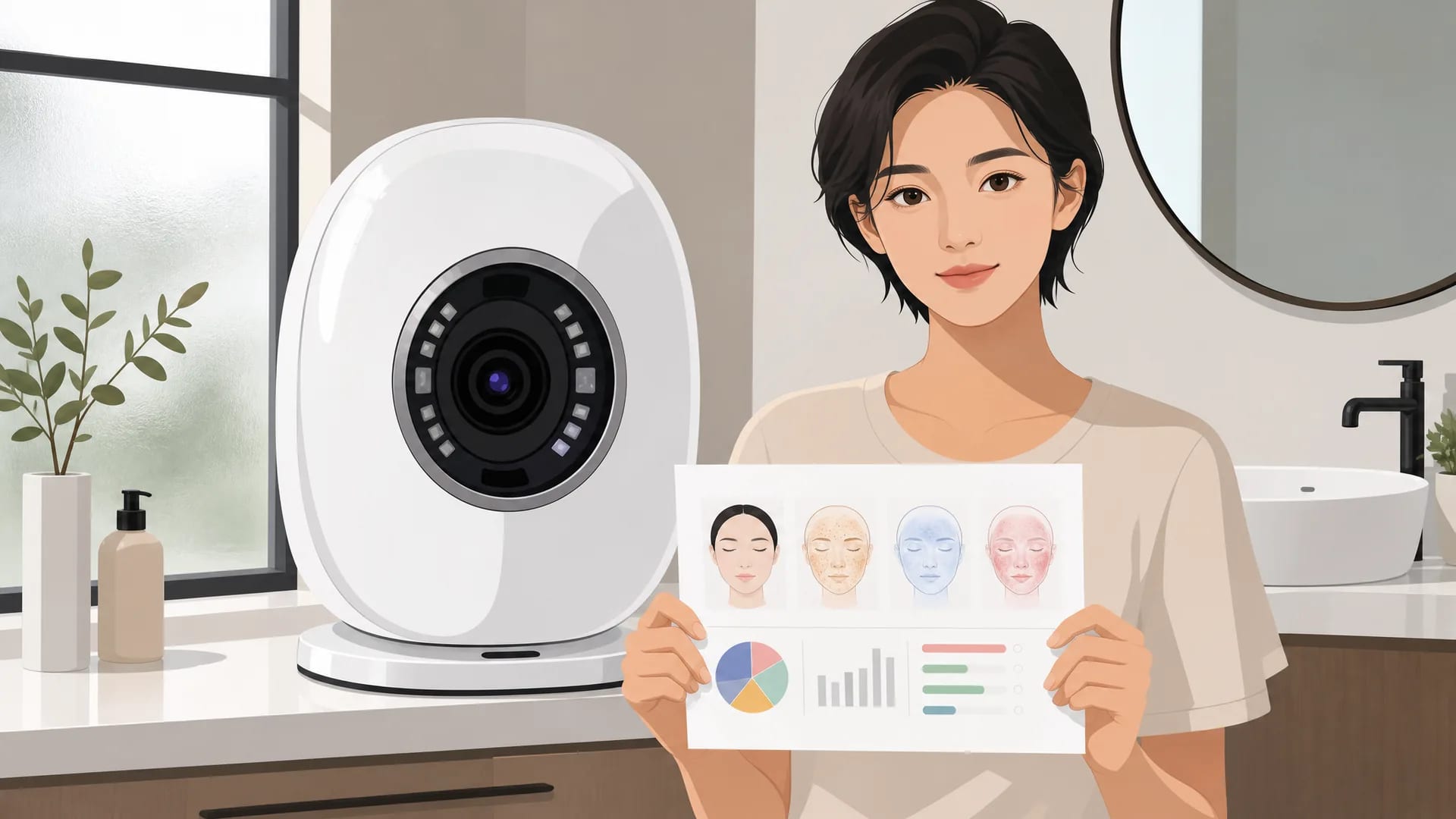
You just got your printout, and it's full of numbers you didn't have an hour ago. Moisture: some percentage. Sebum: another. Melanin. Pore score. No one handed you a key to read it, so you're left guessing whether "62" is good or bad. That gap is exactly what this guide fixes, what your skin scan result means, in language you'd actually use with a friend, not a dermatology textbook.
Why Skin Scan Readings Are Confusing at First
Most first skin scan happens fast. You sit in front of a device, it takes a few seconds, and then a sheet of numbers gets handed to you. There's rarely time, or a person, to walk through what each line says about your skin. So the numbers sit there, explained swiftly to sell you products or treatments you don't need.
The confusion isn't your fault. Skin scan readings take a few minutes of conversation to explain properly, not a glance at a printout. That's the piece most places skip. And a number is a signal, not a verdict. The scanner measures; reading it is a separate step, and that's the step that matters. A raw figure only means something once it's set in context (your skincare routine, your climate) and checked against what's actually visible on your skin, because a number on its own can point the wrong way. That's the difference between being handed a printout and having your skin read by a proper Coach.
What a Skin Scan Actually Measures
A scanner like JANUS Pro isn't guessing. It uses light and sensors to read specific things happening on and just under your skin's surface: how much water is there, how much oil, how much pigment activity, and how visible your pores are. Each of those becomes its own number, because they're not the same thing and they don't move together. You can have high oil and low moisture at the same time, and that combination alone explains a lot of "why does my skin feel oily but also tight" confusion. Understanding how the JANUS Pro scan actually works makes the rest of this easier to trust, because it's measurement, not a beauty-industry guess.
Breaking Down Each Skin Scan Metric
Here's the plain-language version of what shows up on most scan reports, and how a coach at Saebit reads each one during a JANUS skin analysis results walkthrough.
Moisture Level Skin Meaning
Moisture on a skin scan means surface hydration, water content in the top layer of your skin, not oil. A low moisture reading means your skin's outer layer is dehydrated, which can happen even if your skin looks shiny. Shine usually comes from sebum, not water. So a face that looks "oily" can still score low on moisture, and that combination is common, not rare. It just means your skin needs water-based hydration, not less oil-based product.
Skin Pore Score Meaning
Pore score reflects the size and visibility of your pores, plus how clogged they currently look under the scanner's light. A higher number usually means pores are more enlarged or more congested with buildup, oil, dead skin, sometimes both. It's not a fixed trait like eye color. Pore appearance shifts with oil production, hydration, and how consistently dead skin gets cleared, which is why this number moves over weeks, not years.
Melanin Reading Skin Scan Explained
Melanin readings measure pigment activity in your skin right now, not your skin tone as a category. This is the one people misread most. A melanin reading isn't about "dark skin versus light skin." It's about how active pigment production is in specific areas, often linked to sun exposure, inflammation, or leftover marks from breakouts. Two people with the same overall skin tone can have very different melanin readings in a spot that's had recent sun or a healing pimple. That's useful information, because it tells you where pigment is actively building up, not just where it already sits.
What counts as "normal" for young skin in the tropics?
Here's the part that's easy to miss, and it's why JANUS Pro earns the "Pro". It doesn't judge your skin against a generic chart. It compares your readings against its worldwide database within your age group. A 15-year-old is measured against other 15-year-olds, not against adults. So your "normal" is already age-matched before you ever see the sheet. However, the reference group is global - readings are often built from data measured in temperate, drier climates, and they don't account for what constant heat and humidity do to skin.
Skin in Malaysia's heat and humidity tends to run higher sebum and lower surface moisture readings than skin measured in temperate climates, which is why imported "normal range" charts can be misleading for local teens. Your skin is producing more oil to cope with heat, while surface moisture evaporates faster in humid air, even though it feels like the opposite should be true. Add teenage hormonal shifts, which naturally push sebum production up, and a reading that looks "high" against an imported chart might be completely typical for a 14- or 18-year-old living in Bandar Sunway, Cyberjaya, or Shah Alam. A full report may include wrinkles, elasticity, or a "skin age" score. At 13 to 23, those aren't your story. The readings that count are the conditioning ones: moisture, sebum, pore, and pigment activity. Those are what to read, track, and act on.
"Normal" isn't one number. It's a range, and that range shifts with your age, your climate, and even the week of the month. A single high sebum reading isn't automatically a problem. Context matters more than the raw figure. Understanding why sebum readings run higher in Malaysia's heat helps you stop comparing your scan to a chart that was never built with your climate in mind.
Turning Your Skin Scan Results Into a Plan
A printout full of numbers doesn't help you unless it turns into action. This is where a lot of people stall. They know their sebum is "high" and their moisture is "low," and then do nothing, because trying to fix four things at once feels overwhelming.
Matching a Priority to Your Top Reading
Pick one metric, not all of them. If moisture is your lowest number, hydration becomes your priority for the next few weeks, not pore refinement, not pigment work, just hydration. If pore score is your outlier, focus there instead. Trying to chase every reading at once usually means you fix none of them well. One priority, worked consistently, moves the needle faster than four half-efforts.
Consider a 16-year-old with an oily T-zone reading and low cheek moisture. That's a completely different case from a 22-year-old with even oil distribution across the face, even though both might carry the same "oily" label on paper. The first person needs targeted hydration on the cheeks and light oil control on the T-zone. The second might need a more even, whole-face approach. The number alone doesn't tell you this. The pattern across your face does.
Once you've picked your priority, the next step is to build a routine around your top priority reading rather than trying to overhaul everything you use at once.
When to Rescan and Track Progress
One scan is a snapshot, not a verdict. It tells you where your skin sits on one specific day, under one specific set of conditions. Humidity, sleep, stress, sunscreen use that morning all factor in. It doesn't tell you a trend, because a trend needs more than one data point.
Saebit rescans skin at every visit so you can see whether your moisture or pore score is actually shifting, not just guess from how their skin feels. Feelings are unreliable here. Skin can feel better while a scan shows sebum climbing, or feel worse while moisture is actually improving underneath. A rescan at every visit gives you a real line to compare against, not a memory.
Korean skin-conditioning protocols, adapted from Mikwang Academy in Seoul, treat a single scan as one data point in a trend, not a diagnosis. The second and third scan matter more than the first. That's the mindset worth adopting: your first scan is a starting line, not a grade.
Understanding your results is also the first real step toward a different kind of skincare routine altogether, one built around conditioning your skin over time rather than reacting to a bad week. That's a different approach from how skin conditioning differs from a regular facial, and it starts with knowing what your own numbers mean.
If you're in Bandar Sunway, Subang Jaya, Puchong, Shah Alam, Petaling Jaya, Bangsar South, Damansara, or Cyberjaya, the fastest way to stop guessing is to get scanned and have a coach walk you through it. Book a free 90-second Skin Assessment or JANUS Pro scan at Saebit, and turn your numbers into an actual plan instead of a mystery printout.
Frequently Asked Questions
Can my skin be oily and dehydrated at the same time? Yes, and it's common. Shine comes from sebum; hydration is water in the surface layer. You can score high on one and low on the other, which is why skin can feel greasy and tight at once.
Is a high sebum reading bad? Not on its own. In Malaysia's heat and humidity, and during the teenage years, higher sebum is often normal. Your age, your climate, even the week matters more than the raw number.
Does the melanin reading tell me my skin tone? No. It measures how active pigment production is right now, usually from sun, inflammation, or a healing breakout, not a light-or-dark category. Two people with the same skin tone can read very differently.
How often do these numbers change? Moisture, pore, and sebum readings shift over weeks with hydration, oil, and how consistently dead skin clears. Melanin moves with sun exposure and healing. None of them are fixed traits.
I'm a teen, which numbers actually matter? The conditioning metrics: moisture, sebum, pore, and pigment activity. A full report may also show aging metrics like wrinkles, elasticity, or a "skin age" score, but those aren't your story, so don't let them worry you. JANUS Pro already compares you against others your own age, so your readings are age-matched from the start.