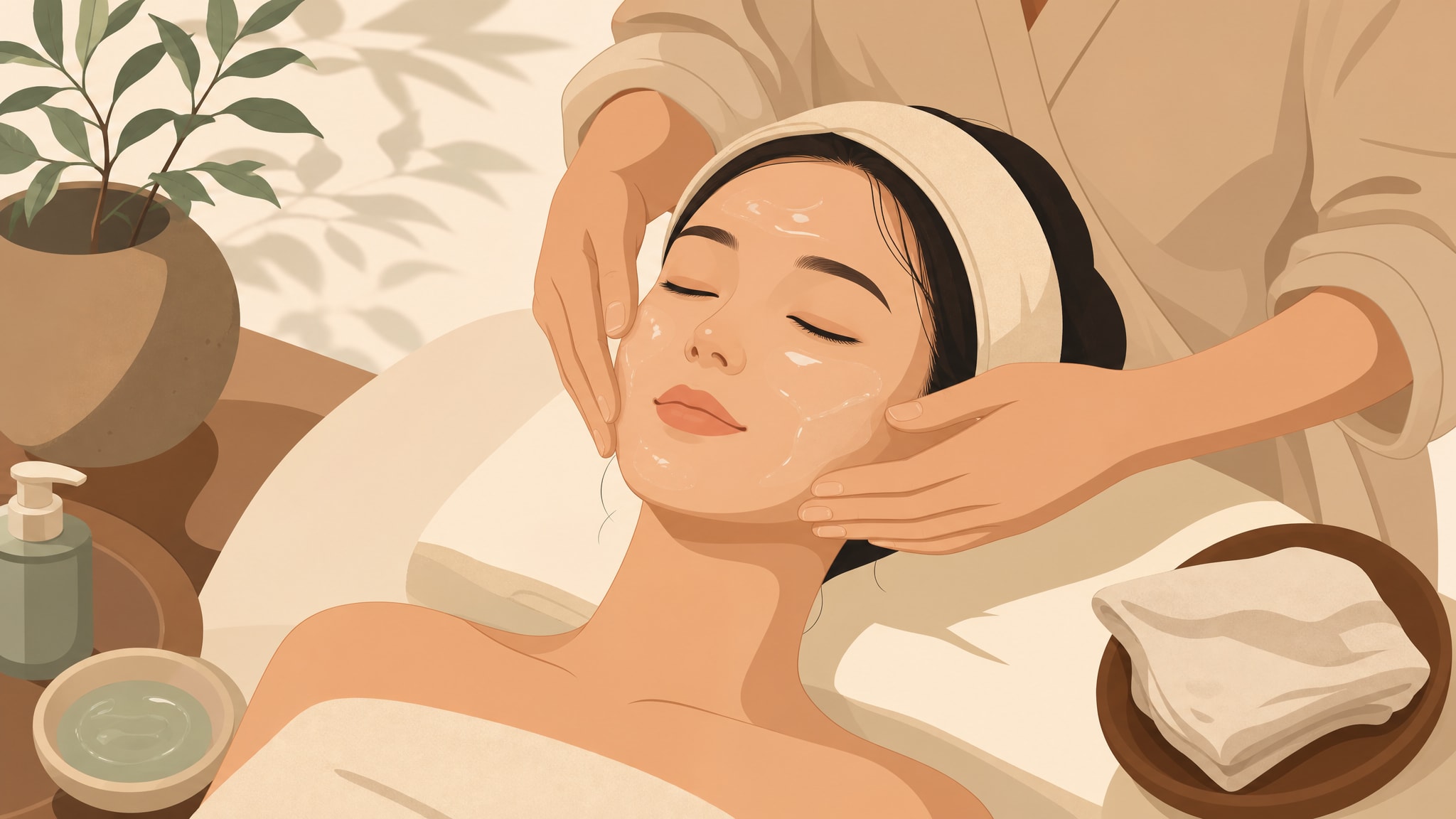
Navigating skincare advice as a teen or young adult in Malaysia often feels like guessing. You scroll through feeds full of conflicting routines, trending products, and dramatic before-and-after photos that never mention age or climate. The confusion comes from applying generic advice to a specific problem: your skin, in this heat, right now. Understanding the difference between a Korean facial and a Malaysian facial is less about picking a national team and more about which philosophy actually fits skin that's still developing in a tropical climate.
Your skin at this stage isn't a fixed canvas. It's a system still learning to regulate itself. Choosing the right approach means looking past the marketing and asking what each method is actually trying to do. One path goes for immediate clearance through force. The other builds resilience through steady conditioning, and knowing which is which stops you from damaging a barrier that's just starting to mature.
Defining the Core Philosophy: Conditioning vs Treatment
The split comes down to this: do you treat skincare as a series of corrections, or as ongoing training? That choice shapes everything from the products you pick to the techniques used on your face, and it decides whether your skin gets stronger over time or just more reactive.
The Korean Skin Conditioning Model
Korean skin conditioning prioritizes hydration layering and barrier repair over the deep extraction and steam-heavy techniques typical of traditional facials. It treats skin as an ecosystem to support, not a problem to eliminate. Protocols lean on gentle enzymatic action and humectant saturation to strengthen the moisture barrier, so inflammation settles on its own instead of getting scrubbed out. Saebit Skin adapts Mikwang Academy protocols specifically for Malaysian heat and humidity, using JANUS Pro scanning to build a Personal Skin Profile for each teen, so the philosophy still works outside Seoul. You're learning to work with your skin's biology instead of fighting its own protective habits.
Traditional Malaysian Facial Protocols
Traditional local facials often run on a correction-based mindset: clean means removed. Steam opens pores, manual pressure extracts impurities, heavy masks seal the surface, and you walk out feeling smooth, which people take as proof it worked. That can be satisfying for congested adult skin, but it frequently overwhelms younger complexions. If you want to see how Korean facials differ from the rest, look at how they handle congestion without mechanical force, read the comparison here. Traditional extraction assumes the blockage itself is the problem. Conditioning treats congestion as a symptom of a barrier that's out of balance.
Adapting Korean Protocols for Malaysian Humidity
Import a routine straight from a temperate climate without adjusting it, and even good ingredients stop working. High humidity can push sebum excretion well above what it would be in a temperate climate, which changes how occlusive products behave on young skin and turns a nourishing layer into a trap.
Why Standard K-Beauty Fails in Tropical Heat
Seoul's dry winters call for rich ceramides and heavier oils. Those don't function the same way in Bandar Sunway or Petaling Jaya. When the air is already humid, skin doesn't need external occlusion to hold onto water. It needs breathable hydration that supports its own regulation. Layer on a thick, winter-formulated barrier in our heat and you get a greenhouse effect: bacteria thrive, pores clog. That's the environmental mismatch behind a viral product clearing your friend's skin in Korea while it breaks yours out here. Here's more on how Malaysia's humidity affects your skin barrier, and why adapting for climate isn't optional.
Modifying Texture and Occlusion Levels
Effective Korean skin conditioning for tropical climates swaps heavy creams for gel-based serums and lightweight emulsions that absorb fully. The formulation has to deliver its actives without leaving a film that mixes with sweat and sebum over the day. Your routine should feel invisible within minutes, never greasy, because that comfort is a sign of absorption, not accumulation. We adjust texture profiles against real-time biometric data so every layer earns its place without adding thermal load. Heavy occlusives have a place in clinical dermatology. They're generally the wrong call for daily maintenance on young, oily-prone skin near the equator.
Technology and Diagnostic Precision in Modern Facials
Guesswork is the enemy when your hormones are already throwing enough variables at you. Move from subjective observation to actual measurement and skincare stops being an art you hope works and becomes something you can track.
JANUS Pro Scanning vs Visual Assessment
A visual check under bright lights misses what's happening beneath the surface, which is how you end up with a protocol built on assumptions instead of evidence. JANUS Pro scanning captures cross-polarized images that reveal porphyrin activity, hidden inflammation, and true moisture levels, none of which the naked eye can catch. That's what separates a modern facial from a traditional one: conditions get measured before anything touches your face. You get a Personal Skin Profile that maps your baseline, so each following session responds to what's actually changed rather than what looks changed. Data replaces the awkward part of a consultation where you try to describe a sensation you don't have the words for.
Data-Driven Protocol Selection
Biometric feedback lets us adjust enzyme concentration and hydration intensity with a precision visual estimation can't match. If a scan shows low porphyrins but a compromised moisture level, we skip deep cleansing and go straight to barrier restoration. That stops the over-treatment cycle where a therapist applies a strong active "just in case" and irritates skin that needed gentleness instead. Accurate diagnosis cuts out the trial-and-error phase that so often damages a developing barrier through unnecessary aggression. Your protocol changes with each scan, so it keeps pace with your skin instead of guessing at it.
Safety Considerations for Developing Teen Skin
Young skin regenerates fast, but it doesn't yet have the structural resilience of fully mature tissue. Treat a teenage breakout with adult-level intensity and you risk long-term sensitivity that takes years to undo.
Non-Invasive Methods Over Aggressive Extraction
Developing skin needs coaching and consistent tracking, not occasional aggressive treatments, to build real resilience against tropical stress. Physical extraction ruptures the follicle wall and spreads bacteria sideways, turning one blemish into a wider patch of inflammation that heals slower than the original spot would have. That's the logic behind skin conditioning versus exfoliation: we prioritize enzymatic dissolution over mechanical removal. Enzymes digest dead cells and sebum plugs chemically, clearing the pathway without stretching the pore or causing trauma. It respects how fragile a young structure is while still getting a deeper clean over time.
Managing Active Breakouts Without Trauma
Blue light therapy and targeted calming serums go after acne-causing bacteria without the redness and scarring risk that comes with squeezing. Active inflammation is a sign of distress, not dirt, and meeting it with force just amplifies the immune response. Non-invasive methods lower bacterial load while supporting the skin's own healing, which matters because post-inflammatory hyperpigmentation can linger for months in melanin-rich skin. Your goal during a breakout is stabilization, not eradication, harsh intervention tends to trigger rebound oil production. Gentle consistency beats sporadic intensity when you're dealing with hormonal fluctuation.
Tracking Progress Beyond the Single Session
A facial shouldn't be a one-off, disconnected from the rest of your skin health. Real improvement is a cumulative adaptation you can document over months, not a temporary glow that fades before you get home.
Measurable outcomes need a baseline, set through digital assessment and updated on a regular scanning schedule. The benefits of progress tracking for your skin include spotting patterns tied to lifestyle, product changes, or your hormonal cycle. You can watch hydration scores climb or porphyrin counts drop, which tells you whether the current protocol is working or needs adjusting. That kind of record shifts ownership to you. It turns a passive treatment into an education about your own biology. Without records, you can't tell a genuine barrier improvement from a cosmetic one that just looks good for a day.
Consistency proves effectiveness far better than a feeling or a mirror check under changing light. A documented baseline stops you from abandoning a routine that's actually working, or sticking with one that isn't out of habit.
Ingredient Transparency and Product Suitability
A marketing claim means nothing if the formula doesn't suit your climate or your stage of development. Read labels critically and you make decisions based on what actually fits, not what's hyped, which protects your skin and your budget both.
Reading Labels for Tropical Compatibility
An ingredient list tells you whether a product was built for your reality or someone else's. Humectants like glycerin and hyaluronic acid thrive in humidity, pulling ambient moisture into skin without adding weight. Petrolatum and mineral oil, on the other hand, seal in a way that suits an arid desert and works badly on a sweaty commute in Shah Alam or Subang Jaya. Your products should list water-binding agents near the top of the ingredient list, and save occlusives for spot treatment rather than the whole face. Texture matters as much as the percentage on the label, a 2% salicylic acid gel behaves nothing like a 2% cream in tropical heat.
Avoiding Comedogenic Triggers in Humid Climates
Some fatty alcohols and esters moisturize fine in a temperate climate and turn into pore-clogging liabilities once you add elevated sebum and sweat. Coconut oil and cocoa butter show up constantly in "natural" or "gentle" products, yet both rank highly comedogenic for oily, young skin in a humid environment. Brand loyalty shouldn't override ingredient scrutiny, especially when a viral trend started in a climate nothing like yours. Test anything new carefully, and watch for congestion that shows up days later, not just an immediate reaction. What works for an influencer in Los Angeles can sabotage your barrier in Cyberjaya.
Making the Choice Based on Your Skin Stage
The right approach depends on where your skin actually is, not how old you are. Some twenty-year-olds need the foundational conditioning usually associated with teen protocols, and some teens have resilient skin that tolerates traditional methods just fine. Be honest about your current state: frequent reactivity, congestion that persists despite cleansing, and stinging when you apply a product all point to a compromised barrier that needs conditioning. If your skin feels tight after washing, looks shiny but still dehydrated, or reacts to something it tolerated before, prioritize restoration over clearance. If your barrier is already stable and you just want occasional maintenance, traditional elements can work in moderation, but resilience comes first, and it's the foundation any advanced treatment later depends on.
Start with clarity before you commit to anything. Take the free 90-second digital Skin Assessment to establish your baseline and find out what your skin actually needs right now.