If your teen has been scrolling through skincare videos, they've probably seen niacinamide sold as a cure for oily skin. The claims sound simple: use it, and the shine disappears. The reality is more specific, and more useful once you understand it.
Niacinamide for oily skin in teens works, but not the way most social media posts describe it. It's not a fast fix. It's a slow, steady adjustment to how the skin behaves. What matters is the mechanism, the right concentration, and how Malaysia's climate changes the timeline, not chasing a high percentage on a bottle.
What Niacinamide Actually Does to Oily Skin
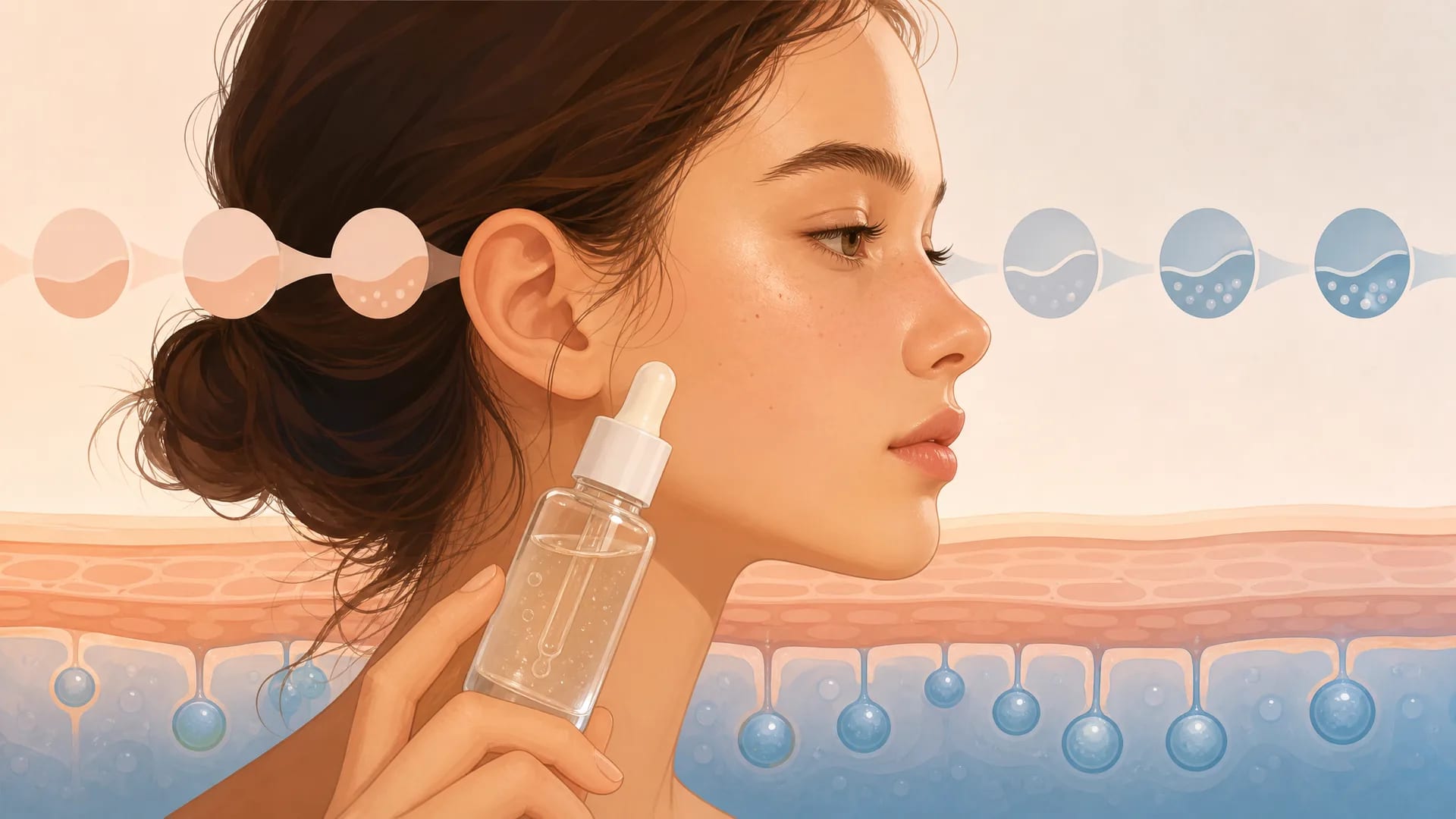
Niacinamide is a form of vitamin B3. It doesn't strip oil or dry out the skin the way harsher acids can. Instead, it works on two fronts at once. It helps regulate how much oil the sebaceous glands produce, and it strengthens the skin's barrier so moisture stays in and irritants stay out.
That second part matters more than most teens realize. A weak barrier often triggers the skin to overproduce oil as a defense response. Fix the barrier, and oil production frequently settles down on its own.
This is why niacinamide doesn't feel like an instant fix. It's a multi-week process. Most people need four to eight weeks of consistent use before they see a real shift in oiliness or pore appearance.
Niacinamide vs Sebum: The Real Mechanism
The niacinamide vs sebum relationship isn't a direct chemical reaction. Niacinamide doesn't dissolve oil. It signals to the skin over time, gradually normalizing sebum output.
That means the mattifying effect people notice in the first few days is temporary. It usually comes from the product's texture, not niacinamide itself. Real, lasting oil control shows up weeks later, after the skin's own oil production starts to shift.
The Right Niacinamide Concentration for Young, Still-Developing Skin
This is where most generic guides fall short. They repeat percentages copied from adult skincare content without asking whether that concentration suits a teenager's skin at all.
Most dermatology guidance places effective niacinamide ranges for general oil control between 2% and 5%. Formulas above that offer diminishing returns for many skin types rather than proportionally faster results. For teens just starting with actives, that 2-5% range is the realistic entry point, not the 10%+ serums marketed heavily online.
Why Higher Percentage Isn't Always Better for Teens
A teenager's skin barrier is still maturing. It hasn't built up the same resilience an adult's skin has after years of exposure and adaptation. Throwing a 10% concentration at that barrier can backfire.
Instead of calming oil production, high concentrations can trigger redness, tightness, or a compromised barrier that produces more oil as a reaction. At Saebit, we see teens who've used 10% niacinamide serums for months with no visible change. Often, the actual issue their JANUS Pro scan flagged was barrier dehydration, not excess sebum.
Can niacinamide cause purging or irritation in younger skin? Purging specifically is rare with niacinamide, since it doesn't speed up cell turnover the way retinoids do. But irritation from too-high concentrations is common. People often mistake it for purging or "detoxing," when really the skin is just struggling to adjust.
Take a 15-year-old in Subang Jaya who switches from a 10% niacinamide serum to a 4-5% formula alongside a lightweight gel moisturiser. That's a more realistic starting point than jumping straight to high-strength actives.
Niacinamide for Teens in Malaysia's Heat and Humidity
Most niacinamide guides are written for drier, temperate climates. That's a problem, because Malaysia's environment changes both how oily skin behaves and how niacinamide performs on it.
Malaysia's average humidity keeps sebaceous activity elevated for most of the year. That's part of why routines built for drier climates often under-deliver here. Skin that would look balanced in a cooler, drier country can look consistently shinier here simply because of the environment. Understanding why oily skin is so common in Malaysia's climate helps explain why a teen following an imported routine might feel like nothing is working.
How Tropical Climate Changes the Timeline
Humidity affects how niacinamide absorbs and how long it stays effective on the skin surface. In a humid environment, sweat and surface moisture can dilute product before it's fully absorbed, especially if it's applied too close to going outdoors.
This doesn't mean niacinamide doesn't work in Malaysia. It means the timeline shifts. Teens here often need more consistent, twice-daily application to see the same results a temperate-climate guide promises in half the time.
It also means results can be harder to judge by feel alone. Skin that still looks shiny in humid weather isn't necessarily producing more oil than a well-controlled routine in a drier climate. It might just be reacting to the air. This is one reason reading your skin type accurately in humid climates matters before deciding a product "isn't working."
Pairing Niacinamide with a Humidity-Friendly Moisturiser
A common instinct among teens with oily skin is to skip moisturiser entirely, thinking it'll add to the shine. That instinct usually backfires.
Should teens use niacinamide with a moisturiser, or does that cancel out the oil-control effect? Moisturiser doesn't cancel out niacinamide's effect. Skipping it does the opposite of what teens intend. When skin senses dehydration, it often compensates by producing more oil, undoing whatever progress niacinamide was making.
The key is texture, not whether to moisturise at all. In Malaysia's climate, a heavy cream can feel suffocating and encourage congestion. A lightweight gel or gel-cream moisturiser, applied after niacinamide, supports the barrier without adding excess weight or feeling greasy by midday.
An Ingredient-First Approach to Teen Acne and Oil Control
Is niacinamide enough on its own for teen acne, or does it need to be paired with other ingredients? For most teens, niacinamide alone isn't enough. It's a strong foundation ingredient. But acne and oil control usually respond better to a small, targeted combination of actives than to one ingredient carrying the whole routine.
Thinking in terms of ingredients, not products, gives teens more control. It's easier to identify what's actually helping and adjust concentration or frequency instead of buying an entirely new bottle every time something isn't working.
Other Ingredients Worth Knowing Alongside Niacinamide
Salicylic acid, used at a low, teen-appropriate concentration, helps clear pores and reduce breakouts by working inside the pore lining rather than on the skin's surface. It complements niacinamide's barrier-and-oil-regulation role rather than duplicating it.
A gentle, non-comedogenic moisturiser and daily SPF round out an ingredient-first approach. None of this needs to be complicated or expensive. What matters is understanding what each ingredient does and building a full teen skincare routine for heat and humidity around actual skin needs, not trends.
Why Guessing at Percentages Isn't the Same as Knowing Your Skin
Everything above gives a solid starting framework. But the honest answer to "what concentration should my teen use" is: it depends on their actual oil levels, barrier condition, and sensitivity. Not a number that went viral online.
Two teens with visibly similar shine can have completely different underlying skin conditions. One might have genuinely high sebum output. The other might have a dehydrated barrier that only looks oily. Treat both with the same 10% niacinamide serum, and you'll get very different results, often disappointing ones.
This is exactly what a proper scan reveals instead of a guess. Seeing what your skin scan results actually mean turns a vague "my skin is oily" into an actual number for oil, hydration, and barrier condition. That number is what determines the right concentration in the first place.
For parents trying to guide a teenager through their first real skincare decisions, this same logic applies well beyond niacinamide. Ingredient literacy, not trend-following, is what protects a developing skin barrier for years, and a parent's guide to teen skincare in Malaysia covers that broader picture.
If you or your teen are ready to stop guessing at percentages, take the free skin assessment built for teens. It takes 90 seconds and shows actual oil and sebum levels, so the next skincare decision rests on data, not a bottle's marketing claim.