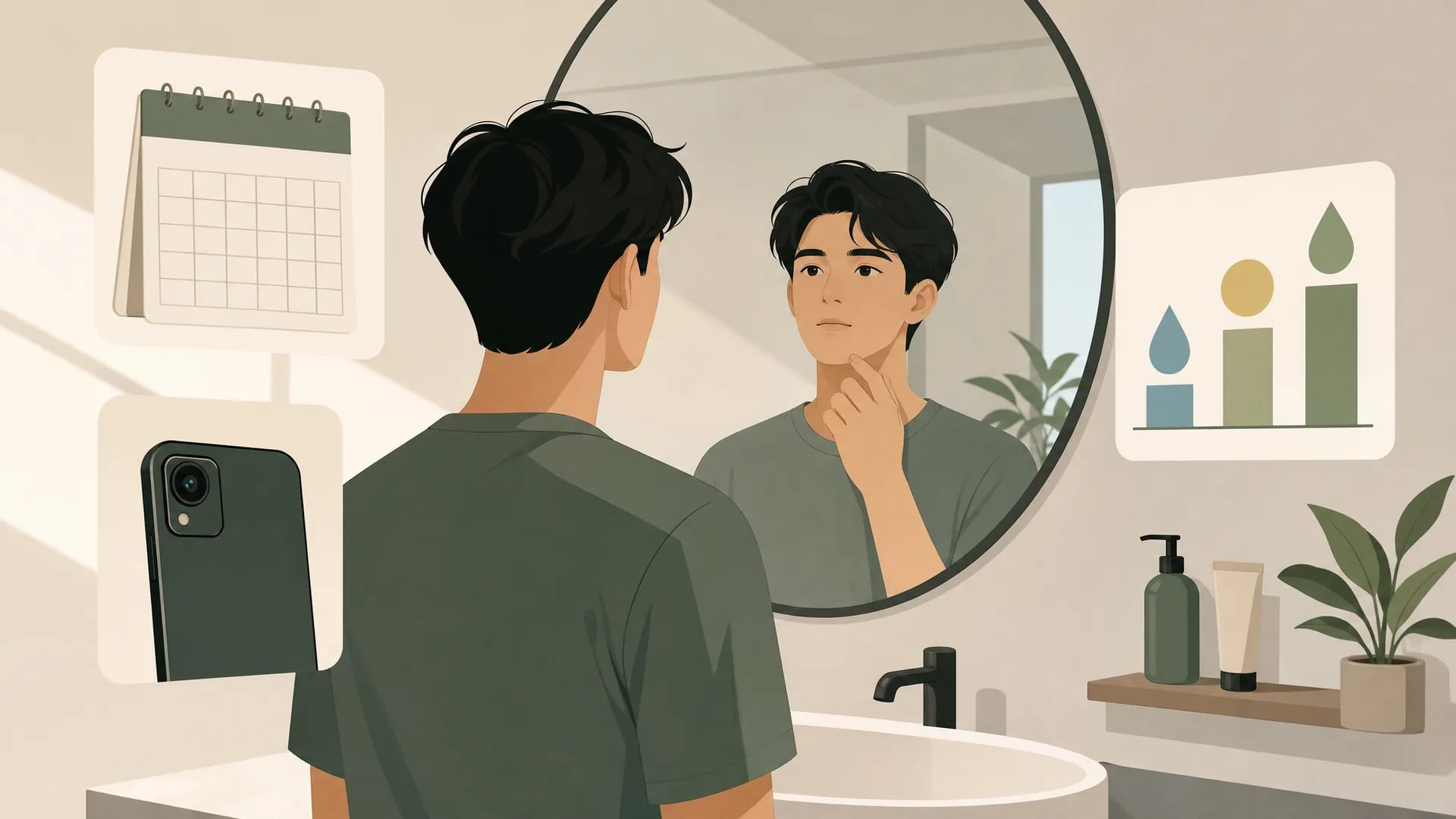
"Take a photo every month" is the most common skincare advice out there. It's also incomplete.
A photo taken by an iPhone tells you how your skin looks under one light, at one angle, on one day. It doesn't tell you what's actually happening underneath, hydration, oil balance, texture, pigmentation. If you want to know how to track skincare progress in a way that actually holds up, you need more than a mirror and a camera roll.
This is especially confusing for teens still learning their own skin. Breakouts, oil swings, and normal hormonal changes can all look like "bad progress" in a photo when nothing has actually gone wrong. Skin progress tracking for teens needs a steadier reference point than mood and lighting.
Why Monthly Photos Alone Don't Tell You How to Track Skincare Progress
Photos feel objective because they're visual. But visual isn't the same as measurable.
The problem with lighting, angles, and mood as your only metrics
Bathroom lighting changes throughout the day. Phone cameras auto-adjust exposure and color. The angle you hold your face at shifts slightly every time.
Add in how you feel that day, tired, stressed, dehydrated, and your perception of your own skin swings even more. None of that has anything to do with whether your routine is working.
A photo can confirm a big, obvious change. It can't tell you your oil balance improved by a measurable amount. It can't tell you your hydration score is trending up even though a small breakout is still visible. That's the gap between how skin looks and how it's actually doing.
Subjective tracking vs objective tracking: what's the difference
Subjective tracking is anything based on impression: "I think my skin looks better," "it feels less oily," "the marks seem lighter." It's a useful gut check. It isn't data.
Objective tracking uses fixed, repeatable measurements, the same metric, measured the same way, at set intervals. That's what turns "I think" into "I know."
This distinction matters most when progress is slow and real, but not yet visible. Without objective numbers, slow-but-real progress looks a lot like no progress at all. That's often when people quit right before results would have shown up.
Using Scan Data as Your Objective Baseline
If photos are subjective, what's the objective alternative? A proper skin scan.
What a skin scan actually measures
A skin scan doesn't rely on how your face looks in a photo. It measures specific data points: hydration, oil balance, texture, and pigmentation.
Saebit Skin's JANUS Pro scan produces a Skin Passport built from these measurements. That personalised profile becomes the fixed reference point every future re-scan gets compared against. If you want a full breakdown of the individual readings, what your skin scan results actually mean is worth reading before your first appointment. For the mechanics of the scan itself, how the JANUS Pro scan works walks through what happens during a session.
Why a baseline matters before you start any routine
A baseline is the "before" that every "after" gets measured against. Without it, you're comparing your skin today to a vague memory of how it looked a month ago. That's exactly the subjective trap photos create.
With a baseline, a before-and-after skin scan comparison isn't a guess. It's a set of numbers, measured the same way twice, showing exactly what changed and by how much.
This is also why the timing of your first scan matters more than people think. Scan before you change anything, so the numbers you compare later stay honest, not muddled by a routine switch mid-stream.
What to Measure and When: Building a Skincare Results Timeline
Once you have a baseline, the next question is: what do you actually track, and how often?
The metrics worth tracking (hydration, oil balance, texture, breakout frequency)
Four metrics matter more than the mirror:
- Hydration, how well your skin holds moisture, which affects everything from flakiness to oil production.
- Oil balance, whether your skin is over- or under-producing sebum relative to your baseline.
- Texture, smoothness, pore visibility, and surface irregularities like post-acne marks.
- Breakout frequency, how often new blemishes appear, not just how many are visible right now.
Each of these can move independently. Hydration can improve while texture stays flat for weeks. That's normal, and it's exactly the kind of detail a photo can't show you.
A realistic re-check schedule (weeks 2, 6, 12)
Skip the vague "check monthly" advice. Skin cell turnover generally runs on a multi-week cycle in young skin. That's why most conditioning protocols ask for at least a 4 to 6 week gap before comparing scan data.
A more useful skincare results timeline looks like this:
- Week 2: Early check-in. Hydration and oil balance may already shift slightly. Texture and pigmentation usually won't have moved yet, that's expected, not a failure.
- Week 6: First real comparison point. This is roughly one turnover cycle, so texture and breakout frequency should start showing measurable change.
- Week 12: A fuller picture. By now, pigmentation and texture scores should reflect the routine's real effect, and breakout frequency should show a clear trend either way.
These points act as skin journey milestones. Each one has a job: week 2 confirms nothing's gone wrong, week 6 confirms direction, week 12 confirms durability.
Reading a Plateau vs a Setback
This is where most people give up on a routine that was actually working, or keep going with one that wasn't. Objective data is the tiebreaker.
Signs it's a plateau (turnover cycle, adjustment phase)
A plateau usually looks like this: your scan numbers are flat or only slightly improved, but nothing has gotten worse. Your skin might be mid-turnover, adjusting to a new active ingredient, or simply due for its next measurement point rather than showing change yet.
A teen dealing with post-acne marks may see zero visible change in the mirror at week 4. But a re-scan can show measurable improvement in texture and pigmentation scores. That's a sign visible change is coming, even though the mirror hasn't caught up yet.
If your metrics are stable or nudging upward and your routine hasn't changed, that's very likely a plateau. Hold steady. Don't switch products.
Signs it's a real setback (new triggers, wrong products, missed steps)
A setback looks different: hydration or oil balance scores drop compared to your baseline, texture scores worsen, or breakout frequency climbs. That pattern usually points to a specific cause, a new product that doesn't suit your skin, a step you've been skipping, diet or stress changes, or a new environmental trigger.
The fix here isn't patience. It's investigation. Check what changed in the weeks before the drop, and adjust that specific factor rather than overhauling everything at once. Building a consistent skincare routine makes this kind of troubleshooting much easier, because consistency removes half the variables before you even start comparing numbers.
Turning Data Into Your Next Skin Training Decision
Data only matters if it changes what you do next. This is the step most skincare advice skips entirely.
When to adjust your routine vs when to hold steady
Use this simple rule: adjust when the data shows a real setback pattern, and hold steady when the data shows a plateau.
Random product swapping based on how skin "feels" that week is guesswork. Structured decisions based on re-scan data are training. Every re-scan is a checkpoint that tells you whether to keep the plan, tweak one variable, or change course.
This is the core idea behind what happens in a Skin Training Session: decisions get made from measured data, one variable at a time, instead of trial and error. It's also the same logic behind a science-backed approach to skin optimization. Staged, measured progress beats guessing every time.
FAQs on Tracking Your Skin Journey
How often should I actually check my skincare progress instead of just monthly photos? Use a scan-based schedule at weeks 2, 6, and 12 rather than a flat monthly photo habit. Each checkpoint has a specific job, so you're comparing the right thing at the right time.
What metrics matter more than how my skin looks in a mirror? Hydration, oil balance, texture, and breakout frequency. These move independently and often shift before anything is visible in a mirror.
How is a skin scan different from taking my own before-and-after photos? A scan measures fixed data points the same way every time. A photo captures light, angle, and mood, which change constantly and aren't comparable across sessions.
How do I know if I've hit a plateau or if something is actually going wrong? Check your numbers against your baseline. Flat or slightly improved scores with no new triggers usually mean a plateau. Dropping scores alongside a new product, habit, or trigger usually mean a real setback.
How long should I wait after starting a new routine before judging results? At least 4 to 6 weeks, matching one skin cell turnover cycle. Judge results before that point and it almost always reads as "no progress," when progress may already be underway.
Is tracking skin progress different for teens than for adults? Yes. Teen skin deals with more hormonal fluctuation, so mood-based or mirror-based tracking is even less reliable. Objective metrics matter more, not less, for teens learning to read their own skin for the first time.
If you want a real starting point instead of another guess, book a free 90-second Skin Assessment and follow it with a JANUS Pro scan. Saebit Skin adapts Korean skin-conditioning protocols from Mikwang Academy in Seoul, built around staged, measured progress rather than one-off treatments. That scan becomes your baseline, the fixed point every future check-in gets measured against, whether you're tracking overall skin health or tracking improvement in post-acne marks and texture specifically. Saebit Skin serves Bandar Sunway, Puchong, Shah Alam, Petaling Jaya, Bangsar, Taman Tun Dr Ismail, Cyberjaya, Damansara, and Subang Jaya.