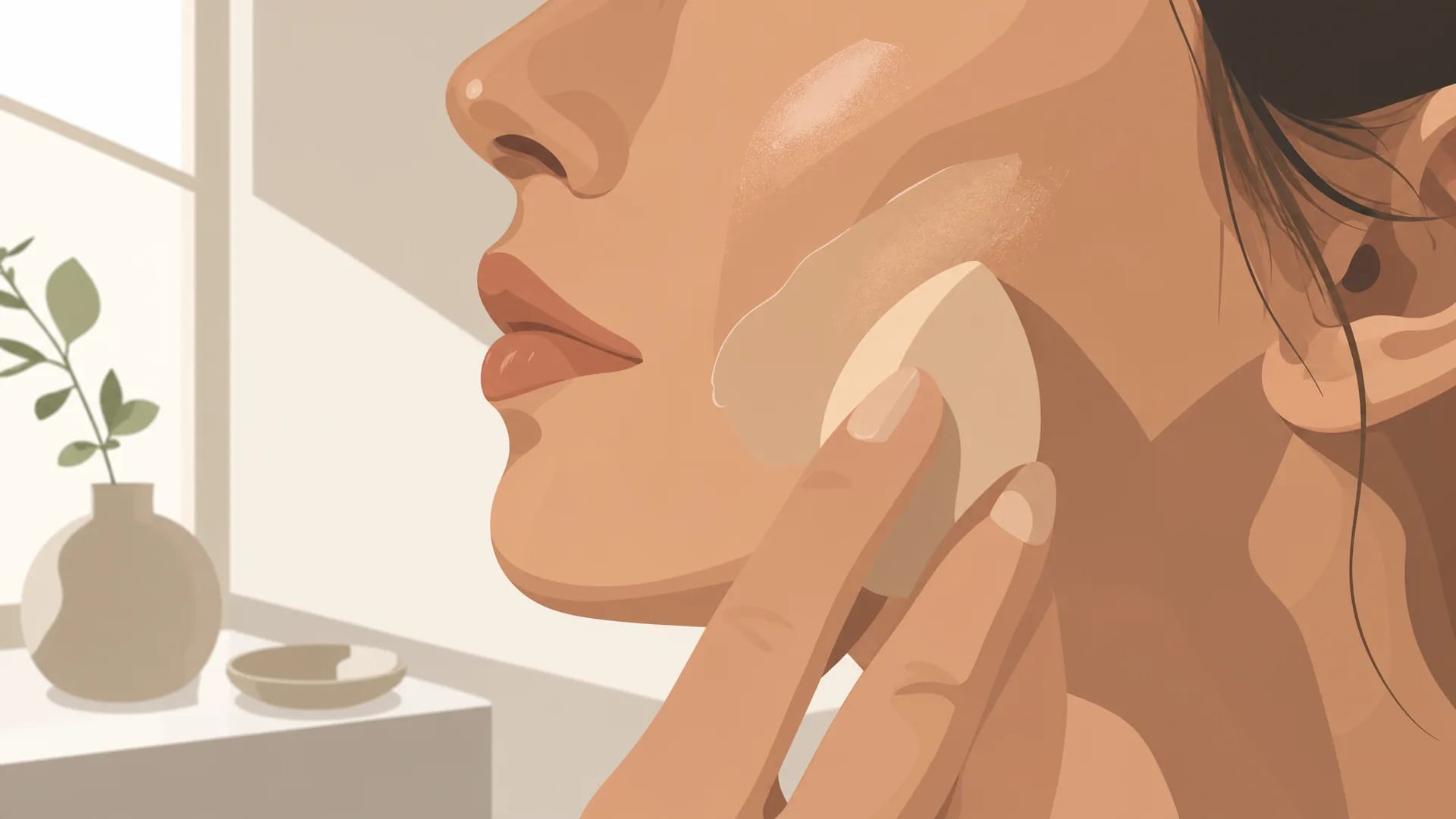
If you've swapped your foundation for skin tint and never looked back, you're not just following a trend. You're making a practical call. Skin tint is all you need for most days, but that's not the whole story. Let's get into what tint actually does, why it works so well in Malaysia's climate, and how to know if your skin is actually ready for it.
What Skin Tint Actually Does, And Why That's the Point
Skin tint is a thin, sheer layer of pigment. It evens out tone and blurs redness. It doesn't build up into a mask.
That's the whole design brief. Skin tint isn't trying to hide your skin. It's trying to let it show through, just a little more even.
Foundation works differently, especially full-coverage foundation. It sits on top of skin and covers texture, blemishes, and oil all at once. For skin that's still developing, teenage and young adult skin especially, that coverage can do more harm than good. It traps heat, clogs pores, and hides changes you'd otherwise notice early.
The difference between coverage and conditioning
Coverage hides what's there. Conditioning changes what's there.
Skin tint gives you coverage. It doesn't hydrate your skin, fix oil imbalance, or resurface texture. It's cosmetic, not corrective.
That's not a criticism. It's just important to know what job the product is doing. A tint that evens your tone is doing its job well. Expecting it to also fix breakouts or fade scarring is asking a light coat of pigment to do a treatment's work.
Why Malaysian Heat and Humidity Change the Makeup Equation
Malaysia's climate isn't a mild backdrop to your skincare routine. It's an active variable.
High humidity keeps your skin warmer and damper for longer stretches of the day. That combination pushes your sebaceous glands to produce more oil, whether you're in Bandar Sunway, Puchong, or Shah Alam. More oil means less room on your skin for a heavy base to sit still.
Sweat, oil, and product breakdown in tropical climates
Heavier foundation wasn't built for this. In Malaysia's tropical humidity, it tends to slide, oxidize, or clog pores by midday. That's part of why lighter, breathable bases like skin tint have become the practical default for many young people, rather than a purely aesthetic trend.
Sweat mixes with makeup. Oil breaks down pigment. By afternoon, a full-coverage base often looks patchier and heavier than it did at 8 a.m. Skin tint is thinner and more breathable, so it has less to break down in the first place. It moves with your skin instead of fighting it.
If you want to understand the mechanics behind this, it helps to know why your skin gets so oily in Malaysia's climate in the first place. Oil production isn't random. It's a direct response to heat, humidity, and your skin's own barrier condition.
Skin Tint Is a Signal, Not a Solution: Reading What's Underneath
Here's the honest part. Skin tint looking good on you today doesn't mean your skin is healthy. It might just mean the tint is doing exactly what it's supposed to: evening tone, blurring minor redness.
That's fine, as long as you know the difference.
When tint hides a problem instead of complementing healthy skin
A teen with visibly oily, humidity-prone skin who relies on skin tint alone may be masking early breakouts instead of addressing the oil-hydration imbalance underneath. That imbalance doesn't go away because it's covered. It usually gets worse, quietly, until it shows up as a bigger breakout or a stubborn patch of texture.
Skin tint works best as a finishing step on skin that's already being managed. It's not designed to be a cover-up for skin that's struggling.
Reading your skin type before you reach for products
Before you decide skin tint is "all you need," you need to actually know your skin type. Not guess at it. Know it.
Oily, dry, combination, and dehydrated skin all behave differently under humidity, and they all respond differently to the same tint formula. What looks matte and even on one skin type can look cakey or slide off entirely on another.
Learning to read your skin type accurately in humid climates changes how you shop, how you layer products, and whether tint alone is realistic for your daily routine.
Building a Routine Where Skin Tint Is the Last Step, Not the First Fix
Skin tint isn't a replacement for a skincare routine. It's the last thing you put on, after everything else has already done its job.
Think of it as the finishing touch on a training plan, not the plan itself. Skip the steps underneath, and the tint has nothing solid to sit on.
A simple order of operations: cleanse, treat, protect, tint
The order matters more than the product count. Cleanse first, to clear sweat, oil, and overnight buildup. Treat next, with whatever your skin actually needs: a lightweight hydrator, a spot treatment, an actives serum if your skin tolerates it.
Then protect. Sunscreen is the real non-negotiable step here, not tint. Malaysia's UV exposure is intense year-round, and skipping sun protection undoes a lot of the work your treatment step just did. Choosing the right sunscreen to wear underneath your tint matters more for your skin's long-term health than the tint shade you pick.
Tint goes on last. At that point, it's just evening out what's already in good condition underneath.
How to Know If Your Skin Is 'Tint-Ready'
So how do you actually know if your skin has reached the point where tint alone is enough? Not by looking in the mirror and deciding it "looks fine."
A mirror shows you the surface. It doesn't show you oil levels under the surface, hydration balance, or early texture changes that haven't turned into visible breakouts yet.
What a skin scan or assessment tells you that a mirror can't
In Saebit's Skin Assessment, teens often assume their skin is "fine" because a light tint covers it well, until a JANUS Pro scan shows oil levels or texture irregularities they can't see in a mirror. That gap between what you see and what's actually happening is exactly where problems start to build.
A proper scan measures things a mirror can't: oil concentration by zone, hydration levels, pore congestion, and early texture irregularities. That's what actually tells you whether your skin is stable enough for tint to be your finishing step, or whether it needs more conditioning first.
If you've had a scan already, it's worth revisiting what your skin scan results actually mean before you settle on a makeup routine. The numbers tell you more than the reflection does.
Here's the coach-style read on this: skin tint is a maintenance step, not a training step. It works best once oil balance, hydration, and texture are already being managed, not while you're still figuring them out.
When Skin Tint Isn't Enough, and What to Do Instead
There's no shame in needing more than tint. Most people do, at some point, especially during the teenage and young adult years when hormones and oil production shift constantly.
The key is recognizing the signs early, rather than layering more tint on top of a problem that's growing underneath.
Signs you need more than makeup: persistent acne, uneven texture, scarring
Persistent acne that doesn't settle is one sign. If breakouts keep showing up in the same zones week after week, tint is just camouflage on a cycle that's still active.
Uneven texture is another. If your skin feels bumpy or looks textured under makeup no matter how you apply it, that's a structural issue tint can't smooth out from the outside.
Scarring and post-acne marks are the clearest sign. These don't fade with a cosmetic layer. If you're covering marks daily instead of treating them, it's worth treating post-acne marks and uneven texture directly rather than relying on tint to hide them indefinitely.
If you're washing your face twice a day and still breaking out, that's also worth investigating rather than accepting. Sometimes it's the products underneath, sometimes it's the routine order, and sometimes it's a factor you haven't identified yet. It helps to understand why you might still be breaking out despite a clean routine before assuming tint will smooth things over indefinitely.
Should Teens and Young Adults Choose Tint Over Full Coverage?
Skin tint is the makeup most parents say yes to — skincare-adjacent, sheer, no full-mask connotation. It's a bridge SKU, not a departure.
For most teens and young adults in Malaysia's climate, skin tint suits developing skin better than heavy foundation. It breathes, it doesn't trap oil, and it doesn't hide the early signals your skin needs you to notice. But that only holds if your skin is actually in a stable place. Tint is the reward for a routine that's working, not a substitute for one that isn't.
If you want a fuller view of how all of this fits together season to season, it's worth looking at building a full skincare routine for Malaysia's heat and humidity. Tint is one piece. The routine underneath it is what makes that piece worth wearing.
The fastest way to know where you actually stand is to check, not guess. Take a free skin assessment and get a real read on whether your skin is genuinely tint-ready, or whether it needs some conditioning first. It takes about 90 seconds, and it tells you a lot more than your mirror ever could.