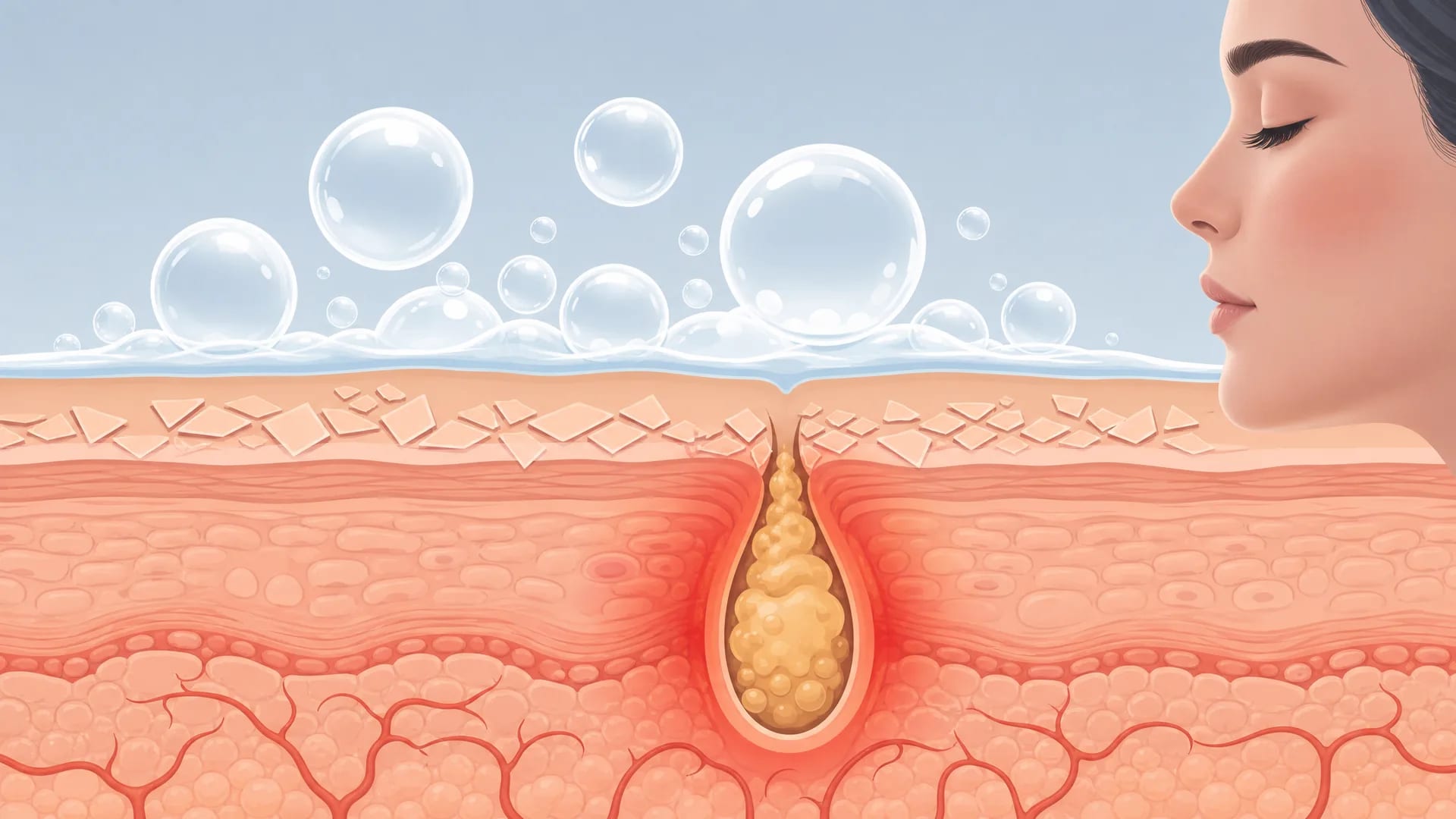
You wash your face every morning and every night. You use a cleanser, maybe a toner, and you still wake up with a new breakout on your jaw or forehead. Everything you've been told about acne comes back to one word: clean. Breakouts are rarely a cleanliness problem. In young skin they’re mostly driven by two forces working together — hormones and heat. Hormones raise oil production; a tropical climate keeps that oil warm and slow to clear.
Washing Your Face Isn't the Same as Treating Your Skin
Cleansing has one job: remove the surface layer of sweat, oil, sunscreen, and dirt that builds up during the day. It doesn't fix an oil imbalance. It doesn't unclog a pore that's already congested. It doesn't repair a damaged skin barrier. Those are three separate problems, and none of them go away just because your face feels "clean" after rinsing.
This is where a lot of people get stuck. They assume more breakouts mean they need to wash harder, more often, or with something stronger. Usually the opposite is true. The fix isn't trying harder at the same step. It's figuring out which of the real drivers behind your breakouts you're actually dealing with.
What "clean" actually fixes, and what it doesn't
A clean face means no visible residue on the surface. It does not mean your pores are clear, your oil production is balanced, or your barrier is intact. Breakouts form under the skin, days before they surface, driven by clogged pores, excess sebum, or inflammation. Cleansing twice a day removes what's on top. It can't reach what's already forming underneath.
Common Reasons You're Still Breaking Out Despite Washing Twice a Day
If washing alone isn't the answer, something else in your routine or environment is working against you. Three causes show up again and again.
Over-cleansing is stripping your barrier
Can washing your face too much cause more acne? Often, yes. A harsh foaming cleanser used twice a day strips natural oils along with the dirt. Your skin reads this as a shortage, so it ramps up oil production to compensate. The result is a rebound cycle: you wash to control oil, stripping triggers more oil, and more oil feeds more breakouts. A teen washing twice a day with a harsh foaming cleanser plus a heavy moisturizer can still break out constantly. Not because they aren't clean enough, but because the barrier underneath is stripped and inflamed.
Your products are wrong for your actual skin type
A heavy, occlusive moisturizer on oily skin traps sebum against clogged pores. A stripping, oil-free routine on dehydrated skin pushes it to overproduce oil to protect itself. Both patterns look like "acne-prone skin" on the surface, but they need opposite fixes. If you're layering products based on what worked for a friend, or what a video told you to buy, you may be treating the wrong problem entirely.
Malaysia's heat and humidity are working against you
Heat and humidity push sweat and sebum production up all day, every day. Add sunscreen reapplication, and your pores are dealing with a constant mix of sweat, oil, and product residue. Washing at 7am and 10pm still leaves twelve to fourteen hours in between for pores to reclog. This is one reason skin here behaves differently from what most global skincare advice assumes. If you want the fuller picture on why your skin gets oilier in Malaysia's climate, it's worth understanding before you change your routine again.
How to Read Your Skin Type Accurately Before Changing Anything
How do you know if your skincare routine is wrong for your skin type? Most people answer this by looking in the mirror or taking a quiz online. Neither is reliable, especially in a humid climate where skin can look oily on the surface while actually being dehydrated underneath. A five-question quiz can't detect that. Neither can a mirror check after a shower.
Before you swap products again, it's worth getting an accurate read on what your skin is actually doing, not what it looks like at a single moment. This is the step most people skip, and it's why so many routines get built on the wrong assumption from day one. If you haven't done this yet, it's the logical next move: learn to read your skin type accurately in humid climates rather than guessing.
What a Skin Scan Reveals That Washing Habits Can't Tell You
So how can you find out what's really causing your breakouts, instead of guessing? A skin scan looks past the surface. Instead of judging your skin by how it looks after washing, it measures hydration levels, oil balance, and pore congestion directly.
This matters because the surface can be misleading. In Saebit's JANUS Pro scans, many teens who complain about "stubborn" breakouts turn out to have skin that's both dehydrated and oily at the same time, a mismatch that over-washing usually makes worse, not better. You can't see that mismatch in a mirror. You can only measure it.
A scan turns guesswork into data: is your oil production actually high, or is your skin producing extra oil to compensate for dehydration? Is a pore inflamed because it's clogged, or because the barrier around it is compromised? Understanding how a JANUS Pro skin scan works shows you exactly what gets measured and why it changes the plan. Once you have that data, what your skin scan results actually mean turns it into a routine, rather than another guess.
Building a Routine That Actually Stops the Breakout Cycle
What should you do instead of washing your face more often? Stop adding steps and start correcting the ones you have, in the right order.
What to change first (one priority at a time)
Start with cleanser strength. If your current cleanser leaves skin tight or squeaky, it's likely too harsh, and that's the first thing to fix before anything else. Swap to something gentler that removes residue without stripping oil.
Next, add barrier support. This means simple hydration, not more actives, so your skin stops overproducing oil to defend itself.
Only after those two are steady should you introduce enzyme resurfacing to clear congestion gradually. Trying to fix all three at once usually backfires, because your skin can't tell the difference between "several good changes" and "another form of stress." One priority at a time gets better results than five products at once. This sequence is the foundation behind a Korean-style conditioning routine built for tropical heat, which treats over-cleansing as a common root cause rather than a habit to double down on. If you want a repeatable structure to follow once the basics are sorted, this is also where you build a consistent routine that gets results instead of restarting from scratch every few weeks.
It also helps to know whether your breakout pattern is typical for your age. How teenage acne differs from adult acne explains why a routine built for adult skin often doesn't work the same way for a teenager's.
When to bring in professional support
If you've adjusted your cleanser, added barrier support, and given it a few consistent weeks with no real change, that's the signal to stop guessing and get a proper read on your skin. Some breakout patterns need more than a routine swap. They need to be seen and measured directly. This is where in-studio Skin Training Sessions help teens who've already tried the DIY route without progress. It's not a sign you did something wrong. It's a sign your skin needs a plan built on what's actually happening under the surface.
Washing your face twice a day was never the problem. The routine around it, and whether it matches what your skin actually needs, is what decides whether breakouts stop or keep coming back. If you're tired of guessing, Saebit's free 90-second digital Skin Assessment is built to identify the real cause behind your breakouts, so your next step is based on your skin, not another trend.